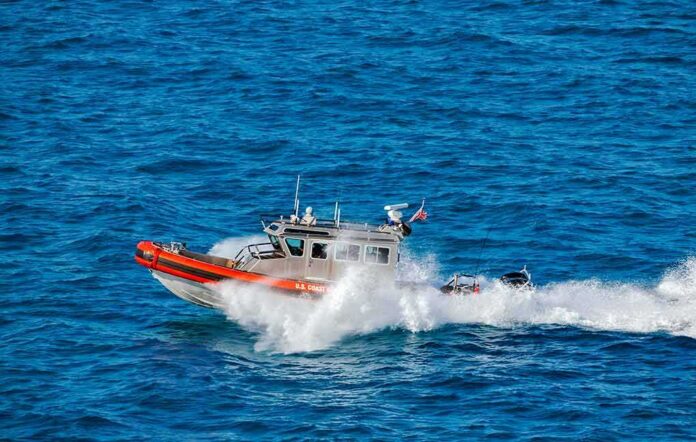
Four people died when the U.S. military struck a speeding boat in the Caribbean, raising fresh questions about force, proof, and accountability.
Story Highlights
- U.S. Southern Command said the vessel was on a known drug route and tied to trafficking.
- The strike is part of a wider campaign that has drawn human rights criticism.
- Officials released few details about evidence behind the targeting.
- Debate continues over the legality of lethal force at sea against suspected smugglers.
Pentagon Account: Strike On Suspected Drug Boat
U.S. Southern Command said Joint Task Force Western Hemisphere carried out a lethal strike on August 25 against a “go-fast” boat in the Caribbean. The command said the boat traveled along established trafficking routes and that confirmed intelligence showed active involvement in drug smuggling. The statement did not share images, cargo details, or sensor records. The military labeled the four dead as narco-terrorists and framed the action as part of ongoing counter-drug operations.
Reuters reported the Pentagon described the event as the latest in a series of strikes against alleged traffickers. Officials again highlighted intelligence but did not disclose the underlying evidence. The government has offered little public information on the people aboard, the boat’s origin, or any recovered contraband. Human rights groups criticized the broader campaign as extrajudicial, saying lethal force should be a last resort and supported by verifiable proof.
What We Know And What We Do Not
Public facts include the date, location region, and the death toll of four. U.S. officials say the target fit a known smuggling profile and that the strike disrupted trafficking. Missing details include whether the boat carried drugs, whether the crew posed an imminent threat, and how the intelligence was confirmed. That gap fuels recurring concern that secrecy blocks outside checks on official claims and leaves families and local communities without clear answers.
Cable and wire reports place this incident within a string of maritime strikes in the Caribbean and the eastern Pacific. Coverage notes stretches of time with no disclosed strikes, followed by renewed action. Reports also note that U.S. statements often cite “confirmed intelligence,” yet provide few records that the public can test. This tension puts pressure on trust in institutions on both the left and the right, who fear unaccountable use of state power.
The Legal And Policy Fight Over Lethal Force At Sea
Legal analysts point to a core dispute. Some say the President can order force against non-state criminals under certain domestic authorities. Others say, under international law, suspected smugglers are not lawful military targets and that the standard should be law enforcement, not armed conflict. Fact-checkers have summarized this split, stressing that many experts question the legal basis for killing people on suspected drug boats.
SOUTHCOM says a U S strike destroyed a go fast vessel on a known Caribbean drug trafficking route killing four people it described as narco terrorists after intelligence allegedly confirmed the boat was actively involved in trafficking#NYI pic.twitter.com/PNMXHgD1XV
— NewYork-Insight (@NewYork_Insight) September 20, 2026
That legal fight reflects deeper policy strain. Supporters argue rapid strikes are needed to hit agile cartels that speed through open waters and dump cargo when chased. Critics argue lethal force without transparent evidence invites mistakes, kills possible civilians like fishermen, and erodes the rule of law. Both sides say they want safer communities and fewer drugs on U.S. streets. They split on whether secrecy and missiles are the right tools to get there.
Why This Matters For Ordinary Americans
Taxpayers fund these operations, yet they rarely see proof beyond short statements. Voters across the spectrum worry that government acts first and explains later. Conservatives see a mission to crush cartels but demand clear wins and respect for law. Liberals want strong policing of crime but warn against unchecked power. Many agree that secrecy and limited evidence can hide errors, waste money, and weaken trust in the very system meant to protect us.
Congress can require clearer reporting, independent after-action reviews, and release of non-sensitive evidence. Lawmakers can also define when force is allowed, when boarding is required, and how to track results. Simple steps like publishing redacted imaging, sensor logs, or debris findings could help. Clearer rules would push agencies to prove claims, protect innocent lives, and still target real traffickers who poison communities with deadly drugs.
What To Watch Next
Watch for any release of imagery, recovered cargo, or identification of the four who died. Track whether Congress holds hearings or demands classified briefings with public summaries. Look for responses from Caribbean and Latin American governments about jurisdiction, evidence, and cooperation. These events will show whether this campaign is tightening oversight and accuracy or leaning further into secrecy that fuels public doubt and regional friction.
If the administration wants lasting support, it will need to show results with proof, not just promises. If critics want changes, they will need to offer practical steps that stop real traffickers while respecting law and life at sea. The stakes are high: lives on the water, safety on our streets, and the trust that keeps a free country both strong and accountable.
Sources:
theguardian.com, foxnews.com, reuters.com, atlantanewsfirst.com, globalpolicyjournal.com
© bingeworthynews.com 2026. All rights reserved.