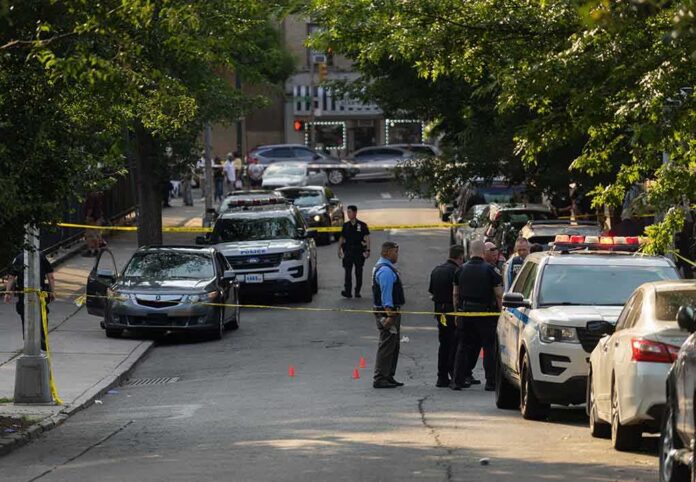
A historic drop in homicide is giving America relief, but the cause remains unsettled and politically contested.
Quick Take
- Preliminary data point to the lowest U.S. homicide rate in decades, and maybe since 1900.
- Researchers say the decline is broad, not limited to one city or one region.
- No single cause has been proven, despite political efforts to claim credit.
- Experts cite a mix of post-pandemic routine changes, policing, and local programs.
Historic Drop in Violence
Multiple recent reports show a steep national and citywide decline in homicides. One analysis said murders in 2025 fell nearly 20 percent from the year before, which would make it the lowest rate since reliable national data began in 1960. Another Council on Criminal Justice review found a 21 percent drop across 35 large cities, with 922 fewer homicides than the prior year.
That trend is real, and it matters. Families in high-crime neighborhoods feel the change first. Cities that spent years under violent pressure are now seeing fewer killings, and the decline stretches across blue and red states alike. Chicago, Baltimore, Salt Lake City, and St. Louis all posted sharp drops in the data reviewed by reporters and analysts.
Why the Numbers Are Hard to Pin Down
The hardest question is not whether violence fell. It is why it fell. Reporters at several outlets said analysts do not know a single proven cause, and one review noted that official 2025 national figures were still pending when many of the stories were published. That makes sweeping political claims shaky, even when the overall direction of the numbers is clear.
That caution matters because different sources use different baselines. The Federal Bureau of Investigation and the Centers for Disease Control and Prevention count violence differently, and the Centers for Disease Control and Prevention often reports higher totals because it includes deaths beyond law-enforcement murder counts. The result is a headline-friendly debate in which politicians can cherry-pick the numbers that best fit their talking points.
What Researchers Think May Be Driving the Fall
Some analysts point to post-pandemic normalization. Schools, workplaces, churches, and civic life reopened, and that return to routine may have helped cool violence after the shock of the coronavirus era. Others point to the effect of federal pandemic aid and local violence-intervention spending, including programs funded through the American Rescue Plan Act, which local leaders used for community violence efforts.
There is also a policing angle. Some reports note that analysts see a mix of strategies, technology, and preventive work as possible contributors, but none of those factors has been isolated as the main driver. That is the key point for readers frustrated by spin: a real decline does not automatically prove the latest political slogan. It only proves that violence is falling while the cause remains open.
President Trump has already been linked in public debate to the drop, and the White House has credited his law-and-order approach. But the reporting does not show that one president or one policy caused the change. It shows a broad trend, a lot of uncertainty, and a familiar Washington habit of turning hard data into a partisan trophy before the facts are fully settled.
Sources:
reason.com, npr.org, cbsnews.com, axios.com, nytimes.com, cnn.com, foxnews.com, abcnews.com, counciloncj.org
© bingeworthynews.com 2026. All rights reserved.