A Paris knife attack that injured three women, including one who was pregnant, revived fears about how quickly public safety and motive questions turn into political noise.
Story Snapshot
- French police arrested a man after the attack near Porte de Clichy in Paris.
- Reports said three women were injured, and one was described as pregnant.
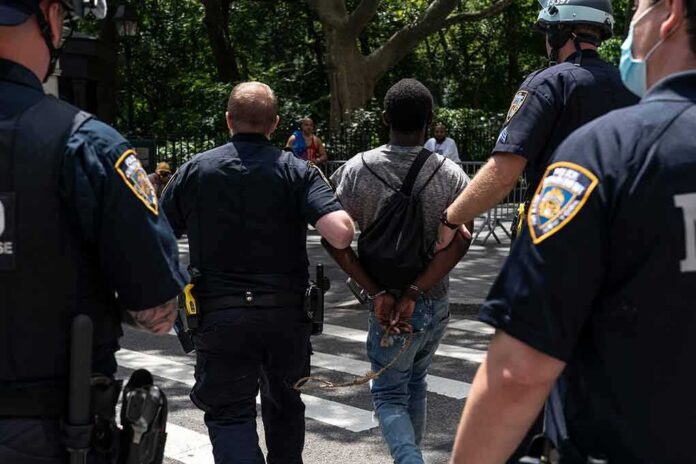
- The suspect was taken into custody at the scene by an off-duty police officer.
- Officials said the motive was not immediately clear, even as reports quoted a possible religious statement.
What French Officials Have Said
French reporting says a man stabbed three women near Porte de Clichy on Monday morning and was arrested at the scene. Interior Minister Laurent Nunez said the attacker used two kitchen knives, and reports identified the victims as women aged 19, 24, and 36. One report said two victims were severely wounded, while another said one was in critical condition, showing early confusion about injury levels.
That gap matters because early breaking news often changes as officials confirm details. In this case, the basic outline is stable: an attack, three women hurt, and a fast arrest. What remains less certain is the final medical picture and the suspect’s full legal status. The supplied reports do not include a prosecutor’s first full statement, hospital bulletin, or charging notice to settle those questions.
Why the Motive Question Stands Out
The motive is where the story becomes more sensitive. Reuters reported that the Interior Minister said the suspect attacked three women with kitchen knives and that the motive remained unclear. RT added that the suspect gave incoherent statements after his arrest. A separate video report claimed the man said, “Allah ordered me to do it,” but that line was not backed in the package by an official French transcript or court filing.
That matters because Paris has seen repeated knife attacks, and each one quickly draws public debate about security, mental health, and extremism. The research set also includes older Paris terror cases, which shows how fast unrelated incidents can get mixed together in public discussion. For this attack, the strongest verified facts are the location, the arrest, the number of victims, and the uncertainty around motive.
What This Says About Public Trust
The incident fits a larger pattern that frustrates people across the political spectrum. Supporters of tougher law-and-order policies see another example of violence in a major city and ask why it keeps happening. Critics of government also point to the thin official record at the start of these cases. When details about injury severity, identity, and motive drift from report to report, trust in public institutions takes another hit.
That distrust grows when journalists, commentators, and social platforms fill gaps before formal records arrive. The result is a familiar cycle: a shocking attack, a flood of instant takes, and a delayed official account that may be more careful but less visible. In the Paris case, the public already has enough to know the event was serious. It does not yet have enough to draw firm conclusions about why it happened.
Sources:
humanevents.com, cbsnews.com, en.wikipedia.org, bbc.co.uk, euronews.com, telegraph.co.uk, bbc.com, independent.co.uk, facebook.com, scmp.com
© bingeworthynews.com 2026. All rights reserved.