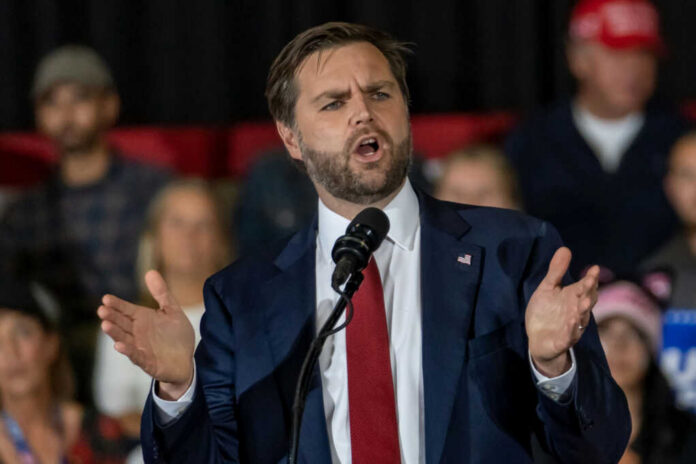
Vice President J.D. Vance is pressing for a negotiated end to the Ukraine war while insisting Europe and Ukraine lead the talks from a position of strength.
Story Highlights
- Vance rejects open-ended U.S. funding for the Ukraine war and voted against a major aid bill.
- Vance says a “reasonable settlement” is possible if Europe and Ukraine help drive talks.
- The administration keeps sanctions and other pressure tools on the table as leverage.
- Public remarks outline goals but do not detail a full, operational peace plan.
Vance’s Stated Goal: End a Costly, Open-Ended War Through Negotiation
In speeches and votes, Vice President J.D. Vance has set a clear line: the United States should not bankroll a never-ending war in Ukraine. In May 2024, he said America had done more than its fair share and opposed keeping checks flowing without a path to peace. In April 2024, he voted against a package that included nearly sixty-one billion dollars for Ukraine, arguing that Russia’s threat had been overstated by Washington hawks. His stance centers on ending the war through talks, not indefinite spending.
At the Munich Security Conference on February 14, 2025, Vance said the administration believes a reasonable settlement between Russia and Ukraine is achievable if the parties negotiate from strength. He stressed that Europeans and Ukrainians must play an active role in any talks to secure a stable and lasting peace. That message aligns with a burden-sharing view many conservatives support: allies closest to the fight must step up, while the United States defends its core interests without writing blank checks abroad.
Leverage and Limits: Sanctions, Pressure, and an Underdetailed Blueprint
Coverage of Vance’s Munich posture described a mix of tools to push Moscow if talks stall or if Russia acts in bad faith. Reports cited economic pressure such as sanctions, and noted that military options had not been fully removed from public discussion, even as the emphasis stayed on diplomacy. These statements show leverage remains on the table to deter aggression while talks proceed. However, the public record does not spell out specific territorial terms, security guarantees, or enforcement steps.
That gap matters for durability. A workable deal needs verifiable steps and clear consequences if either side cheats. Without those details, any settlement can falter once the cameras leave. Vance’s team has framed “negotiating from strength” as the way to prevent that trap, but has not published metrics that define what strength means for Ukraine and Europe before talks begin. The administration’s next move will likely be to translate broad aims into concrete benchmarks and sequencing that allies can support.
Europe and Ukraine Out Front, America Setting Guardrails
Vance’s approach places European capitals and Kyiv at the center of the table. He has said only united partners can negotiate a lasting peace and that Europe and Ukraine must carry an active role in shaping and enforcing any bargain. This fits a larger push for fair burden-sharing inside the alliance. It also reflects practical politics at home. Many Americans want secure borders, lower energy prices, and discipline in federal spending, not another long and costly foreign commitment with no end date in sight.
That said, coordination is essential. Vance’s comments in Munich highlighted values debates inside Europe alongside the war, which some coverage viewed as shifting focus away from Russia’s aggression. The administration must now keep partners aligned on core goals: stop the fighting, secure Ukraine’s people and economy, and deter future attacks. Clear roles for the United States, Europe, and Ukraine in any monitoring and enforcement would help turn broad agreement into action that holds under pressure.
Why This Matters for American Families and Security
Every dollar sent overseas is a dollar not fixing priorities at home. Vance’s vote against the large aid bill and his call to end the war through talks track with a simple test: protect U.S. interests while demanding real results and real help from allies. Ending a grinding war through a settlement, if done right, can reduce pressure on global energy markets and supply chains. That relief can help working families who have shouldered higher prices since the fighting began.
The path will not be easy. Talks require leverage, unity, and patience. Vance argues that leverage grows when Europe leads on its own security, Ukraine shapes the terms, and the United States sets firm guardrails, including economic pressure on Russia if needed. The record shows a negotiation-first policy aimed at a defined end state, not endless funding. The next step is the hard work of setting concrete terms that secure the peace and hold aggressors to account.
Sources:
nato.int, transcripts.cnn.com, abcnews.com, securityconference.org, politico.com
© bingeworthynews.com 2026. All rights reserved.