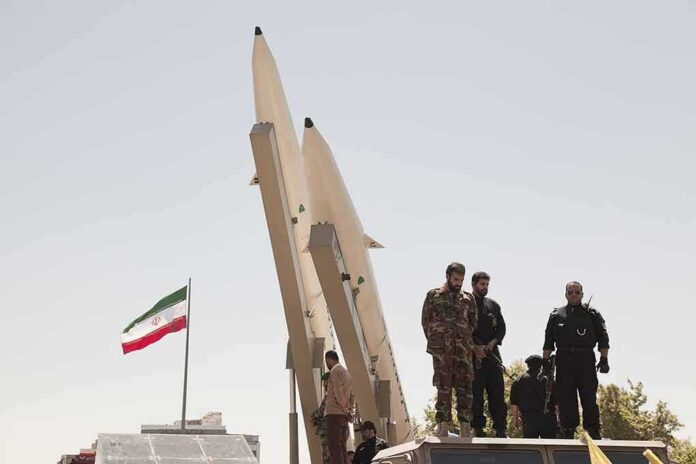
Iran’s Supreme Leader ordered an immediate military response “without geographic limits,” raising the risk that any clash could spill far beyond a single battlefield.
Story Highlights
- Iran’s leader told armed forces to answer any threat with no geographic limits, expanding possible targets.
- Reports say the United States warned allies to be ready for possible strikes on Iran after midterms, with no final decision made.
- Iranian messaging included U.S. and Israeli “physical and non-physical” assets as potential targets.
- Translation gaps and lack of visible mobilization leave open questions about exact intent and capability.
What Iran Said And Why It Matters
Iran’s Supreme Leader issued a public order telling the military to respond at once to “any kind and level of threat,” with “no geographic limits.” Reports said the directive expanded target lists to include U.S. and Israeli assets, both physical and non-physical, which could mean cyber or infrastructure targets as well as military ones. Other outlets carried similar translations that stressed an “immediate, effective response without geographic restriction,” though the exact wording varied across reports.
The message aimed to widen the risk for anyone planning to hit Iran. By saying responses have no borders, Tehran tried to deter action by raising the cost. But the statement did not include a battle plan. It did not list weapons, timing, or red lines. That gap is common in Iran’s playbook. Leaders use broad threats to shape behavior, while keeping options open to act in measured ways later, depending on pressure and politics.
Possible U.S. Action After The Midterms
Reports said the United States told Middle East partners to prepare for possible renewed strikes against Iran after the November 3 midterm elections. Diplomats stressed President Trump had not made a final decision. Other reporting said Washington warned allies to expect possible Iranian retaliation against energy sites and other critical infrastructure if strikes occur. Separate accounts described internal planning for several days of strikes against missile, drone, energy, or nuclear targets, again noting no final call had been made.
President Trump publicly said he was weighing a deal with Tehran against new action, and that any strikes would come after the elections. The White House declined to discuss “sensitive military plans that may or may not exist,” while saying Trump keeps all options on the table to prevent an Iranian nuclear weapon. These signals show a familiar U.S. approach: warn partners, move assets, and preserve choice, while trying to deter Iran and calm markets before votes and holidays.
How Broad Threats Collide With Real-World Limits
Iran’s sweeping words created headlines about “no geographic limits,” but public records do not show visible, verified force movements tied to this specific order. The reports confirm the statement and meetings with commanders, yet they do not document missile unit activation, proxy tasking, or cyber operations starting after the message. Translation differences also cloud the exact phrasing, which appeared as “without geographical limits,” “without geographic restriction,” and calls for an “immediate, effective” response in different outlets.
History suggests Tehran mixes strong warnings with controlled action. Analysts note Iran uses deterrence by punishment—missiles, drones, proxies, cyber—while trying to avoid a full war it is unlikely to win. That creates a gap between big talk and selective strikes. The risk is still real. A misread signal, a stray rocket, or a hit on energy sites could spark quick escalation that hurts regular people first, through fuel prices, trade shocks, and a new cycle of conflict fatigue across the region and at home.
What This Means For Americans Watching Prices And Policy
Energy markets react to threats against Gulf facilities and shipping lanes. Even rumors of strikes can nudge up prices that families feel at the pump and in heating bills. Both parties say they want stability, yet Washington and Tehran keep using pressure and counter-pressure. Voters see a pattern: leaders trade threats while costs rise and trust falls. Many Americans worry that distant decisions are made by insiders, while regular people pay the bill in higher prices and deeper uncertainty.
🚨 TEHRAN UNLEASHED: SUPREME LEADER DIRECTS UNCONSTRAINED STRIKES 🚀
The ISLAMIC REPUBLIC has ordered ARMED FORCES to execute immediate retaliation, escalating regional threats across the MIDDLE EAST via IRANIAN proxies.#Iran #OSINT
— OSN – Observer Security Network (@OSN_Reports) October 31, 2026
Here is the bottom line. Iran’s leader drew a wide circle around possible targets, and U.S. officials told allies to be ready after the midterms. No green light is confirmed. But the space for mistakes is large. Clear channels, honest red lines, and focus on protecting civilians and energy flows could reduce risk. Without that, the cycle of warning and response can spin on, while families on both sides of the ocean brace for the next shock.
Sources:
mediaite.com, en.ilsole24ore.com, haaretz.com, aljazeera.com, ntn24.com, noticiassin.com, indiatoday.in, independent.co.uk, cfr.org
© bingeworthynews.com 2026. All rights reserved.