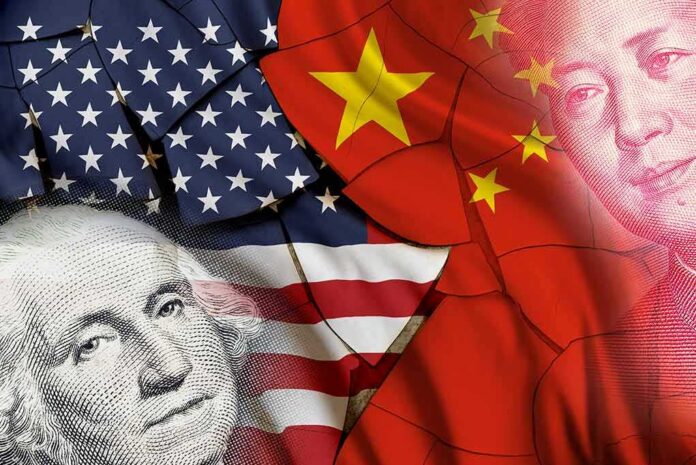
America’s top diplomat is warning that a war with China could be “catastrophic” for the world even as Washington deepens a tense but necessary partnership with its biggest rival.
Story Snapshot
- Secretary of State Marco Rubio says the United States “has to have a relationship” with China to avoid disaster.
- Rubio describes talks with Beijing as a “delicate balancing act” between rivalry and cooperation, especially on security and trade.
- He insists dialogue will not come at the expense of United States allies or the America First agenda.
- Both American and Chinese leaders are preparing high-level meetings while warning that deep differences will not go away soon.
Rubio’s warning: conflict with China could be catastrophic
United States Secretary of State Marco Rubio is raising alarms about what a war with China would mean for ordinary people around the globe. Speaking on the sidelines of a summit in the Philippines, Rubio said any major clash between the two nuclear powers would be “really catastrophic for the world” and “god forbid” it ever happens. This language reflects growing fear that great-power mistakes, not just bad intentions, could throw millions of lives, jobs, and savings into chaos overnight.
Rubio tied that warning to a push for steady communication with Beijing, even when both sides are angry or suspicious. He pointed back to the Cold War, when the United States and the Soviet Union still kept military and diplomatic channels open during crises. In his view, keeping phones ringing and meetings going is not a sign of weakness, but a basic safety measure when missteps could trigger economic collapse or even nuclear exchange. That pitch speaks directly to Americans who fear global elites may gamble with their future.
“We have to have a relationship” with a rival power
Rubio has been repeating one core point: the United States and China “have to have a relationship” because they are the two largest economies and major nuclear militaries. In recent remarks, he said it would be “reckless and irresponsible” for the two countries not to talk, given how closely their economies and security interests are tied together. He stressed that contact is not optional when trade flows, supply chains, and regional peace can all be shaken by a single misread signal or sudden move.
At the same time, Rubio is not hiding the sharp disputes between Washington and Beijing. He has described “great differences” on issues like trade rules, technology, Taiwan, and China’s alignment with Russia that are likely to last “for the foreseeable future.” Chinese Foreign Minister Wang Yi has pushed back, demanding that the United States “respect China’s core interests” and “address China’s legitimate concerns,” while still agreeing talks have been “pragmatic, positive and constructive.” The message from both sides is clear: they will keep arguing, but they will also keep meeting.
Balancing America First, allies, and global stability
Rubio’s comments come under President Trump’s second-term America First agenda, which aims to defend United States jobs and security while cutting dependence on hostile regimes. Critics on the right worry that warmer words toward Beijing mean another round of globalist deals that help multinational companies but leave American workers exposed to unfair trade or slave labor in foreign factories. Liberals, meanwhile, fear that hard-line competition could expand the divide between rich and poor and add pressure on minority communities at home. Both sides question whether Washington elites are truly putting regular citizens first.
To answer those concerns, Rubio has been clear that any “positive” relationship with China cannot come at the expense of partners or United States presence in Asia. He said the United States “have to have a relationship with China and we want it to be as positive as it possibly can be. But that won’t come at the expense of our allies and our partners in the region or our presence here either.” In other words, Washington will keep bases, treaties, and commitments that many see as a check on Chinese power, even as it builds new boards of trade and investment that could give Wall Street and big corporations fresh chances to profit.
Deep differences, daily talks, and a fragile peace
Rubio’s diplomatic push shows how fragile today’s peace really is. He has talked about “significant irritants” in the relationship, from Taiwan and the South China Sea to technology bans and human rights. At a hearing on the State Department budget, he said both governments must communicate to “de-escalate potential points of conflict that could lead to something broader” and manage “strategic stability” over years or even decades. That phrase—strategic stability—is a reminder that leaders are trying to keep tensions below the level where accidents or misjudgment tip into war.
Secretary of State Marco Rubio says maintaining a working relationship with China requires a "delicate balancing act."
He warns that any military or economic conflict between the U.S. and China would be "catastrophic" for both countries and the world.
Rubio adds the U.S. must… pic.twitter.com/rTZQNUyZQm
— Fox News (@FoxNews) August 2, 2026
For many Americans, this feels like yet another example of high-risk global maneuvering carried out by distant elites while main-street problems go unsolved. Rubio’s call for constant dialogue with a communist superpower may sound like appeasement to some conservative voters who are tired of unfair trade, stolen technology, and soaring costs. Liberal skeptics see powerful nations trading carefully worded threats while doing little to ease inequality or climate stress. Yet on one point, Rubio’s message matches a growing bipartisan worry: if leaders on both sides mismanage this “delicate balancing act,” it will not be politicians or corporate boards who pay the highest price, but the families, workers, and small businesses caught in the fallout.
Sources:
facebook.com, state.gov, washingtonpost.com, nytimes.com, china.usembassy-china.org.cn, youtube.com, apnews.com
© bingeworthynews.com 2026. All rights reserved.