Senate Republicans confirmed Jay Clayton to lead the nation’s intelligence agencies after a bitter fight over his answers, not his résumé.
Story Snapshot
- The Senate confirmed Clayton by a 51-47 vote that split mostly along party lines.
- Clayton enters the job as a former Securities and Exchange Commission chairman and current United States attorney for the Southern District of New York.
- Supporters cited his legal and financial-crime background, while critics focused on his refusal to plainly answer who won the 2020 election.
- The confirmation followed a delayed and politically charged process that included a canceled hearing and sharp partisan tension.
Confirmation Vote Lands After Months of Tension
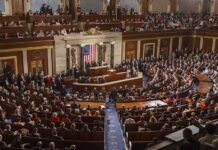
The Senate confirmed Jay Clayton on Tuesday evening, ending a monthslong stalemate over President Trump’s pick for director of national intelligence. The vote was 51-47 and split mostly along party lines, showing that the result came with little bipartisan comfort even after a committee advance and floor debate.
The job puts Clayton in charge of the Office of the Director of National Intelligence and gives him access to some of the nation’s most sensitive secrets. That makes the post much bigger than a routine cabinet-style appointment. The office also helps steer the work of 18 intelligence agencies, so Senate scrutiny centered not only on qualifications but on trust, judgment, and independence.
Why Supporters Backed Clayton
Clayton brought a record that supporters said fit the demands of the post. He previously served as United States attorney for the Southern District of New York and as chairman of the Securities and Exchange Commission during Trump’s first term. The White House said his nomination was drawing “strong bipartisan acclaim,” and the Senate Intelligence Committee advanced him on a 9-8 vote after some Democrats praised him.
During the confirmation debate, supporters emphasized his work on financial crime and national security-linked economic threats. A Senate-floor account described a Republican senator praising Clayton for his leadership against financial crimes and his focus on risks tied to China and pandemic-era economic stability. Clayton also told senators he would do the job “candidly, independently, and with my best judgment,” a line meant to ease concern about pressure from the White House.
The Questions That Shadowed the Nomination
Critics centered their case on one hearing moment that lasted only seconds but carried more weight than many pages of résumé material. Clayton would not clearly say who won the 2020 presidential election, and he used the word “certified” instead of plainly saying Joe Biden won. That answer fed doubts about whether he would speak plainly under pressure in a role built on candor and oversight.
The Senate confirmed Jay Clayton as director of national intelligence Tuesday, 51-47. Every Republican voted yes. No Democrat did.
Clayton has never worked inside an intelligence agency. He was a corporate lawyer at Sullivan and Cromwell, chaired the Securities and Exchange… pic.twitter.com/Aos54hoeDK
— Straight Arrow (@StraightArrow__) July 29, 2026
The nomination also drew heat because Trump first delayed the hearing, then pushed the process forward after a month of tension. Clayton was also pressed on subpoenas involving New York Times journalists and declined to discuss the matter in detail on national-security grounds. Those episodes gave opponents a ready-made story about secrecy, loyalty, and political management around a post that should depend on steady judgment.
What the Vote Says About Washington
Clayton’s confirmation shows how national security posts now get judged as much on politics as on paper qualifications. The Senate did not reject his résumé. It accepted it, but only after a fight over how he would answer hard questions and whether he would stay independent once in office.
That split matters because it reflects a deeper problem inside Washington. One side sees a capable veteran of federal law and finance. The other sees a nominee who would not give straight answers on a core constitutional issue. For readers frustrated with elite institutions, the fight over Clayton fits a familiar pattern: big jobs are still decided in a climate of distrust, and trust is the one thing both parties keep saying they want but rarely build.
Sources:
facebook.com, youtube.com, nypost.com, pbs.org, en.wikipedia.org, whitehouse.gov, nytimes.com, cnn.com, cbsnews.com, cnbc.com
© bingeworthynews.com 2026. All rights reserved.