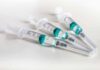
An experimental swallowable vaccine just stopped one of the world’s nastiest diarrheal bacteria in its tracks in 9 out of 10 challenged adults.
Story Snapshot
- An oral Shigella sonnei vaccine called WRSs2 showed about 89% protection in a phase 2 human challenge trial
- No vaccine-related serious adverse events were reported, but a handful of strong reactions forced dose cuts
- One-dose vaccination even hit 100% protection in this small, tightly controlled study
- Big questions remain about how well this will work for children in poor, high-risk regions
A dangerous germ meets a simple oral vaccine
Shigella sonnei is a leading cause of severe bacterial diarrhea worldwide, hitting young children in low-income countries especially hard and driving hospital visits, stunted growth, and deaths. Antibiotic resistance in Shigella strains is rising fast, which means the old plan—treat and hope—looks weaker every year. Vaccine makers have chased a solution for decades, but no Shigella vaccine has ever made it to market. That is why a simple oral dose that can block disease is such a big deal.
WRSs2 is a live, weakened form of Shigella sonnei that you drink, not inject. Scientists removed key genes that help the bacteria spread and cause disease, trying to trigger strong immune protection without full-blown illness. Early phase 1 testing in healthy adults in the United States showed WRSs2 and its cousin WRSs3 were generally safe: 11 of 80 vaccine recipients had diarrhea, mostly mild, and immune responses rose with higher doses. That set the stage for the tougher test: can it stop real, deliberate infection?
Inside the bold human challenge trial
Researchers ran a randomized, double-blind, placebo-controlled trial using a controlled human infection model, or CHIM. Healthy adults in the United States got either WRSs2 or placebo, then swallowed a measured dose of a virulent Shigella sonnei strain weeks later. This design strips away most variables: everyone gets the same bug, at the same time, under close medical watch. It is not the real world, but it is a very sharp early test of whether a vaccine does anything useful at all.
In the pooled two-dose WRSs2 groups, only 3 of 34 participants, about 9 percent, developed shigellosis, compared with 21 of 26, or 81 percent, in the placebo arm. That worked out to 89 percent vaccine efficacy with a tight confidence range and a highly significant p-value. Even more eye-catching, none of the participants in the one-dose WRSs2 group got sick, yielding a 100 percent efficacy estimate in that small subset. For an enteric vaccine, those numbers sit near the top of the charts.
The safety profile is encouraging, but not perfect
Safety is where cautious readers should lean in. Across the phase 2 trial, no vaccine-related serious adverse events or deaths were reported, and that matters a lot. However, six participants had grade 3 post-vaccination adverse events—strong reactions that triggered two reviews by the independent data safety monitoring board and led to a protocol change to lower the dose and tighten eligibility. Those events were self-limited, but they show the line between powerful and too powerful is not fully settled.
Trial documents list expected side effects like tiredness, headache, fever, chills, and mild diarrhea in a large share of recipients, with more intense diarrhea and vomiting in a small number that pushed the team to cut the dose. Earlier phase 1 work already hinted at a dose–reactogenicity tradeoff: higher doses meant more diarrhea, especially for the related WRSs3 strain. For anyone with a conservative bent, that is the classic medical tension—how much punch do you want in a live vaccine that you plan to give to toddlers with poor nutrition?
Great numbers, but from a narrow, ideal setting
The catch is that this glowing efficacy comes from healthy adults in the United States, watched in a research unit, exposed to a single lab strain of Shigella sonnei. Real life in South Asia or Africa looks nothing like that: kids face repeated infections, mixed gut bugs, malnutrition, different Shigella strains, and uneven medical care. History shows that vaccines that shine in controlled human infection trials often look less impressive in messy field conditions. So 89 percent in a challenge model may not mean 89 percent on dusty village roads.
There is another guardrail for healthy skepticism. GlaxoSmithKline controls the full clinical study report for this phase 2 trial under internal trial ID 205494; outside researchers must email to request it. That is standard industry practice, but it does slow independent review. Media coverage has stressed the “promise” and “89% protection” headline more than the grade 3 reactions, narrow population, and challenge-model limits. Without a vocal “Side B” raising specific counter-evidence, the risk is not conspiracy—it is complacency.
What must happen before this reaches the real world
The next honest steps are clear and, frankly, non-negotiable. Researchers need phase 3 field trials in Shigella-endemic regions, especially in children under five, who bear the highest burden. They must map which antibody levels truly track with protection, so we know what “good immunity” means in practice. They also need dose-finding work that trims out those grade 3 adverse events while keeping robust defense. A strong vaccine is a blessing; an overreactive one is a political and ethical headache.
From a common-sense, conservative view, the right stance is guarded optimism. A cheap, oral vaccine that cuts severe diarrhea, antibiotic use, and hospital strain would be a win for families, health systems, and national budgets. But speed should not outrun proof. High efficacy in a challenge bunker is not the finish line; it is the starting gun. The real test is whether WRSs2 can protect the poorest children on earth as well as it protected fit American volunteers with a call button by the bed.
Sources:
sciencenews.org, cidrap.umn.edu, prnewswire.com, academic.oup.com, pubmed.ncbi.nlm.nih.gov, gsk-studyregister.com, theemmesgroup.com, pmc.ncbi.nlm.nih.gov, reachmd.com, gavi.org
© bingeworthynews.com 2026. All rights reserved.