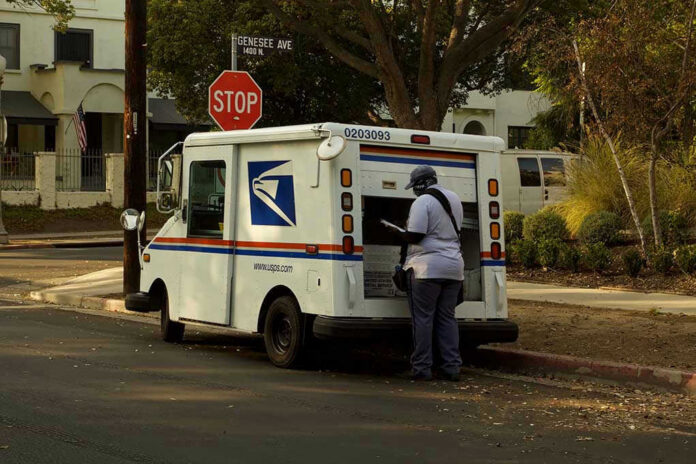
The man in charge of America’s mail is warning “we are out of cash” — and the fight over what to do next will decide whether the Postal Service serves citizens or special interests.
Story Snapshot
- US Postal Service leaders say cash could run dry within a year without help from Congress.
- Years of losses, a hard borrowing cap, and falling mail volume created a structural crisis.
- Regulators and union leaders accuse postal management of “manufacturing” panic and grabbing power.
- Key choices now will affect rural service, election mail, union power, and taxpayer exposure.
Postmaster’s Warning: “We’ll Be Out of Cash in Less Than 12 Months”
Postmaster General David Steiner told Congress that at the current pace, the United States Postal Service will run out of money within a year and would no longer be able to deliver the mail.[3] He backed that up with numbers most families would recognize as a warning sign. The Postal Service lost about $9 billion in fiscal year 2025 and $9.5 billion the year before, and it was already $1.3 billion in the red in the first quarter of 2026.[3] Those losses come even as prices have risen and some package revenue has grown.
Outside analysts confirm the cash squeeze is real, even if they argue about the exact “drop-dead” date. A Brookings Institution study notes the Postal Service has hit its legal borrowing ceiling of $15 billion and cannot tap any more debt to cover yearly deficits.[2] The same study says the agency finished 2025 with only $8.2 billion in cash on hand, enough to cover roughly thirty-three days of expenses at its near $90 billion annual cost level.[2] Once that runs down, there is no easy backstop.
How Decades of Policy, Declining Mail, and a Hard Cap Collided
The current showdown did not appear overnight. The Postal Service has been posting losses almost every year since 2007, piling up more than $100 billion in red ink despite multiple restructurings and bailouts.[7] Mail volume has collapsed from over 200 billion pieces a year at its peak to about 109 billion today, wiping out an estimated $80 billion in revenue based on current stamp prices.[12] At the same time, the number of delivery points has grown, so carriers are walking and driving more miles to bring less profitable mail to more doors.
Congress also boxed the Postal Service in with rules that sound good in Washington but fail in the real world. By law, the agency can only borrow from the United States Treasury and only up to $15 billion, a limit set back in 1992 and never updated for inflation or growth.[2] USPS first slammed into that cap in 2012, briefly paid some back, and hit it again in 2024.[2] Unlike a private firm, it cannot issue stock or regular bonds. So when yearly costs are higher than revenue, there is no flexible safety net. That is why one more year of $9–10 billion losses on top of about one month of cash becomes a real crisis.[2]
“Manufactured Crisis” or Necessary Wake-Up Call?
Not everyone accepts Steiner’s message at face value. A government oversight summary notes that Postal Regulatory Commission members say the situation is a “five-alarm fire,” but they blame years of sharp stamp hikes and falling service quality, not only the borrowing cap.[12] One commissioner points out that first-class stamp prices jumped roughly half in about five years, from the mid-fifty-cent range into the eighties, and argues that these hikes drove more customers away instead of saving the system.[1] That criticism lands with many conservatives who see government agencies raising prices and then blaming “the system” when people leave.
Postal unions and some lawmakers go even further, calling the crisis “manufactured.” American Postal Workers Union leaders argue that management has cried wolf before and compare the $9 billion loss to just a few days of federal war spending.[3] They also warn that suspending employer payments into the Federal Employees Retirement System every two weeks—about $200 million—amounts to dipping into workers’ future benefits to plug short-term holes.[3] Their message to Congress is blunt: do not reward bad management with a blank check or new powers, especially if rural post offices close while top officials and union brass stay comfortable.
The Real Stakes for Conservatives: Service, Elections, and Taxpayers
For readers who care about limited government, rule of law, and honest elections, this fight is about more than stamps. A Brookings review describes a deep “structural mismatch” between what Congress orders the Postal Service to do and how it is allowed to pay for it.[2] Lawmakers demand universal service six days a week to every address at nearly uniform prices, while also limiting how USPS can raise capital or invest its pension funds.[11] That setup almost guarantees future showdowns like this one unless rules change.
This – is Anti Democratic under the false guise of election protection: Postmaster General David Steiner told senators that, under a new proposed rule, the U.S. Postal Service (USPS) will not deliver mail ballots unless states hand over their voter lists to Trump.
— crowsfeet (@crowsfeet98) June 24, 2026
There is also growing concern over how a desperate Postal Service could be used as a political tool. Social media and hearing coverage show battles over rules for handling mail-in ballots and questions about postal monitoring of election mail.[12] When the same leadership that says “we are out of cash” also asks for less outside oversight—going so far as to float eliminating the Postal Regulatory Commission in an internal reform paper—critics warn it starts to look like “give us more money with less oversight.”[1] That is the exact opposite of what constitutional conservatives want from any federal body.
What Reforms Should Come Next?
Members of Congress now face a familiar Washington choice: write another check, or force real reform first. The House Oversight Committee’s own summary says Congress may need to give short-term help to avoid a shutdown, but also warns that if deeper business model problems are not fixed now, the Postal Service will keep bleeding money and service will likely get worse.[12] Some research groups argue that earlier laws, such as the mandate to pre-fund retiree health benefits decades in advance, helped manufacture this crisis and should be rolled back.[14]
For conservatives, the path forward should be clear. Any relief must come with tight strings, real transparency on route-level costs, and strong independent oversight—not less. Lawmakers should demand honest audits, stop using the Postal Service as a playground for social experiments, and protect rural customers and election integrity first. If the Postmaster General says “we are out of cash,” then taxpayers have every right to say, “Show us the books, fix the rules, and stop asking our grandkids to pay for years of bad decisions.”
Sources:
[1] YouTube – Postmaster General: “We are out of cash.”
[2] Web – US Postal Service will run out of cash within a year without … – CNN
[3] YouTube – USPS Is Running Out of Money—And Its Pension Could Be at Risk
[7] Web – The US Postal Service’s fiscal crisis – Brookings Institution
[11] Web – US Postal Service Expects to Run Out of Cash in a Year without …
[12] Web – USPS warns Congress it will run out of cash within a year without …
[14] Web – USPS could run ‘out of cash in 12 months,’ postmaster general says
© bingeworthynews.com 2026. All rights reserved.