The unprecedented capture of Venezuelan President Nicolás Maduro by U.S. forces marks a turning point in international justice and drug enforcement.
Story Highlights
- U.S. military captures Maduro and wife in Caracas.
- Maduro faces charges in New York for narco-terrorism.
- Operation sparks debate on U.S. presidential powers.
- Potential shift in Venezuela’s political landscape.
Maduro’s Capture: A Bold U.S. Operation
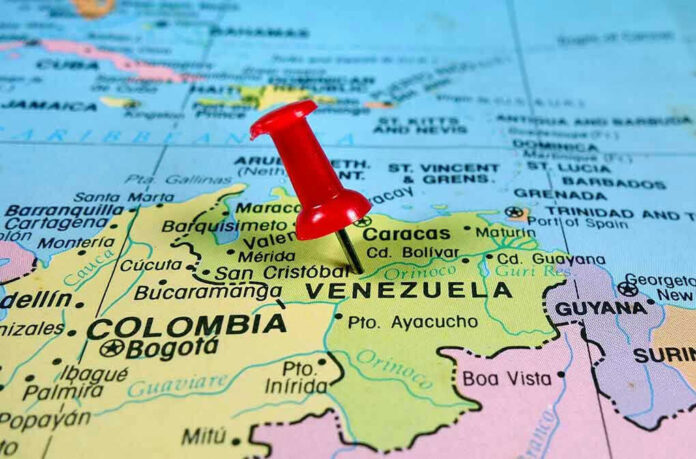
Nicolás Maduro, the embattled Venezuelan leader, was captured by U.S. special forces in a nighttime raid on January 2-3, 2026. This dramatic operation involved a coordinated strike at multiple Venezuelan sites, culminating in Maduro’s arrest and transportation to New York. The charges he faces include narco-terrorism conspiracy and possession of destructive devices. This capture signifies a significant escalation in the U.S.’s approach to dealing with what it describes as “narco-states,” and raises questions about the extent of presidential powers in directing military action without full congressional approval.
Maduro’s capture and extradition were carried out with remarkable precision. After being detained at the presidential complex in Caracas, Maduro and his wife, Cilia Flores, were transported to the USS Iwo Jima, a U.S. warship. From there, they were flown to Stewart International Airport in New York. The operation, executed under the directive of President Trump, underscores the administration’s aggressive stance on foreign leaders accused of drug trafficking and related crimes. For many, this action marks the first time a sitting head of state has been captured and extradited in such a manner, setting a new precedent in international law enforcement.
Legal and Political Implications
Maduro’s arrival in the U.S. to face charges opens up a complex legal and political scenario. The charges he faces in the Southern District of New York include narco-terrorism and cocaine importation conspiracy. This case could have far-reaching implications, potentially setting a legal precedent for prosecuting foreign leaders on U.S. soil for crimes committed abroad. Additionally, this development may lead to a shift in Venezuela’s political dynamics, as the opposition could leverage this vacuum to gain power and align more closely with U.S. interests.
The operation has stirred significant debate regarding the use of presidential powers under Article II of the Constitution. While the Trump administration justifies the strike as a necessary action to protect U.S. citizens and interests, critics question the lack of congressional approval for such a military intervention. This situation highlights the ongoing tension between executive powers and legislative oversight in matters of foreign policy and military action.
Global Reactions and Future Outlook
The international community has reacted with a mix of surprise and concern over the U.S.’s bold actions. Allies and critics alike are closely watching the unfolding legal proceedings and the potential ramifications for U.S.-Venezuela relations. The capture of Maduro could lead to further instability in Venezuela, with potential economic and social repercussions, especially given the country’s vast oil reserves. As the world observes, the outcome of this case could influence how nations address similar issues of narco-terrorism and international justice moving forward.
In the short term, the capture and extradition of Maduro are likely to create a power vacuum in Venezuela, leading to potential unrest and uncertainty. Long-term, this could be a pivotal moment that deters other leaders from engaging in illicit drug activities, reshaping the landscape of international drug enforcement. As Maduro faces the full wrath of U.S. justice, the world waits to see how this bold operation will influence future diplomatic and legal strategies in addressing narco-states.