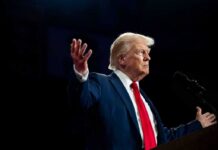
A House Democrat’s support for Trump-era air traffic control cuts during a government shutdown ignites a debate on safety and partisanship.
Story Highlights
- A House Democrat breaks party ranks, supporting Trump’s air traffic cuts amid shutdown.
- Debate ensues over aviation safety and partisan loyalty during the crisis.
- The shutdown highlights vulnerabilities in critical infrastructure and federal workforce.
- Bipartisan cooperation emerges as a rare but crucial factor in crisis management.
House Democrat Supports Trump’s Air Traffic Control Cuts
During the 2018-2019 federal government shutdown, a House Democrat took the unusual step of supporting the Trump administration’s decision to cut air traffic control operations. This move, aimed at managing limited resources, sparked a heated debate over aviation safety and partisan loyalty. The Democrat’s stance diverged from the majority of their party, raising questions about the potential risks to air travel safety during such a critical time.
The shutdown, which resulted from a budget impasse over border wall funding, severely impacted federal operations. Air traffic controllers, deemed essential, continued to work without pay, leading to shortages and operational strain. This situation underscored the precarious position of critical infrastructure during shutdowns, prompting discussions on how to better protect these essential services in the future.
Implications for Aviation Safety
Safety experts warned that the temporary cuts in air traffic control could have increased the risk of accidents and errors. Although no major incidents were reported, the reduced capacity heightened concerns among passengers and airlines. The National Air Traffic Controllers Association (NATCA) emphasized the long-term morale and staffing issues that could arise from such measures, urging for legislative reforms to exempt essential services from future shutdowns.
In response, the FAA outlined contingency plans and participated in post-shutdown reviews to address these concerns. The aviation industry, already sensitive to staffing disruptions, faced significant challenges during the shutdown, with airlines experiencing delays and financial losses.
Bipartisan Cooperation in a Polarized Environment
The House Democrat’s support for Trump’s policy illustrated a rare instance of bipartisan cooperation in a highly polarized political climate. This cooperation was driven by the necessity to maintain minimal operations and ensure public safety, even at the cost of breaking party ranks. The incident highlights the potential for cross-party collaboration when public safety is at stake, though such occurrences remain uncommon.
As the aviation sector gradually recovered post-shutdown, debates continued about the best ways to protect essential services during future government shutdowns. Bipartisan legislation has been proposed to address these concerns, reflecting a growing consensus on the need for reform.
Sources:
The Washington Post, “How the 2018-2019 Shutdown Affected Air Travel” (2019)
Politico, “Democrats, Trump Officials Clash Over Shutdown Aviation Cuts” (2019)
NATCA, “Shutdown Impact on Air Traffic Control” (2019)
CNN, “How the Shutdown Ended: Timeline” (2019)