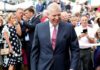
Don Lemon’s arrest isn’t really a celebrity-media story—it’s a stress test for whether Americans can protest, worship, and report the news without the federal government blurring the lines between all three.
Quick Take
- Federal agents arrested Don Lemon in Los Angeles on Jan. 29-30, 2026, tied to a Jan. 18 protest that disrupted a church service in St. Paul, Minnesota.
- Prosecutors cite civil-rights interference and the FACE Act, a law better known for clinic-access cases but also applicable to houses of worship.
- A magistrate judge initially rejected charges against Lemon, and an appellate court declined to force a warrant—then a grand jury move preceded the arrests.
- The case forces an uncomfortable question: when does recording a protest become joining it, and who decides?
The moment a red-carpet weekend became a federal case
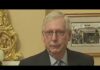
Federal agents arrested former CNN anchor Don Lemon in Los Angeles while he was in town covering the Grammy Awards, a setting that made the arrest feel engineered for maximum visibility. The government tied the arrest to Lemon’s presence filming a Jan. 18 anti-ICE protest at Cities Church in St. Paul, where demonstrators disrupted a worship service. Lemon’s camp argues he acted as press, not protester, and the distinction is everything.
The facts that matter most sit in the timeline. Protesters targeted the church after identifying a pastor as ICE’s acting St. Paul field director. After the disruption, prosecutors sought warrants for Lemon and others, but a magistrate judge rejected the Lemon-related request. An appellate court later declined to compel the lower court to issue warrants, even as one judge suggested probable cause existed. Then, a grand jury was empaneled, and arrests followed.
The FACE Act: a law with a new battlefield
The Freedom of Access to Clinic Entrances Act dates to 1994, and many Americans still associate it almost exclusively with abortion-clinic blockades. The law’s reach, however, extends beyond clinics to include houses of worship, which is why prosecutors can frame a church disruption as more than disorderly conduct. That legal hook matters: once the government invokes civil-rights interference tied to worship, the case shifts from “rowdy protest” to “federal protection of constitutional exercise.”
Conservatives generally support protecting churches from intimidation and disruption; the right to worship without harassment sits near the core of ordered liberty. The hard part arrives when the government wraps that protection around expansive charging theories, especially “conspiracy” and “civil-rights interference,” while also pulling in a journalist whose role, at least as described by his team, was documentation. If federal power can treat cameras as co-conspirators, the precedent won’t stay confined to one disliked cable-news personality.
Two rights collided: free worship and free press
Public debate about this arrest tends to polarize into team jerseys—either Lemon “had it coming” or the DOJ “went rogue.” The more productive lens treats it as a collision of rights in a single sanctuary. The congregants’ rights deserve serious protection, and so does a journalist’s right to record matters of public concern. The law has long struggled when those rights occupy the same physical space at the same time.
The government’s theory appears to hinge on the protest’s disruption, not on journalism as a concept. Lemon’s defense hinges on the idea that mere presence and filming do not equal participation. That line usually feels clear in hindsight, but it gets muddy in real time: where someone stands, whom they speak to, whether they coordinate, whether they block access, and whether they amplify a disruption can become evidence. Courts will have to sort signal from noise.
The unusual procedural path raises the stakes
The arrest draws extra scrutiny because judges reportedly pushed back earlier. A magistrate judge rejected the initial push to arrest Lemon, and the appellate court did not order the lower court to reverse course, though a judge flagged probable cause. Then a grand jury emerged as the next chapter. That sequence gives both sides rhetorical ammunition: DOJ can claim it found a proper vehicle; Lemon’s defenders can claim prosecutors shopped for a different pathway after losing.
Attorney Abbe Lowell framed the arrest as an unprecedented First Amendment attack and suggested it served as a political distraction amid other controversies, including the killing of two Minnesota protesters earlier in the month. Attorney rhetoric should never substitute for proof, but it can spotlight what feels off to ordinary Americans: when the same government that failed to convince a judge pivots quickly to a high-profile arrest, people naturally ask whether the goal is deterrence as much as justice.
What this means for normal Americans, not cable-news celebrities
The biggest consequence won’t land on Don Lemon’s résumé; it will land on future public squares. If the government convinces a court that filming a disruptive act inside a church can satisfy elements of a federal conspiracy or FACE Act theory, journalists and citizen documentarians will change behavior fast. Fewer cameras means fewer facts, which usually benefits the loudest activists and the most powerful institutions, not the public trying to figure out what actually happened.
Churches will also watch the outcome. A strong, narrow precedent that protects worship from deliberate disruption while distinguishing press activity from participation could reinforce public order without chilling speech. A broad precedent that encourages prosecutors to treat recording as complicity could boomerang on communities that value religious liberty and limited government. Conservative common sense supports protecting sanctuaries, but it also distrusts elastic federal theories that can expand to fit the politics of the moment.
The Arrest of Don Lemon is Not About Don Lemon | Column by @colbyhall https://t.co/b803Hp55vl
— Mediaite (@Mediaite) January 30, 2026
The next key moments will be in court: the precise charges, the government’s evidence of coordination, and any proof that Lemon did more than record. Until then, the arrest reads less like a verdict than a message—about who controls the boundaries between protest, worship, and the press, and how quickly those boundaries can move when the case is famous enough.
Sources:
https://abcnews.go.com/US/don-lemon-arrested-connection-minnesota-protest-sources/story?id=129699476
https://www.cbsnews.com/news/don-lemon-in-custody-former-cnn-anchor-sources-say/
https://www.politico.com/news/2026/01/30/don-lemon-arrest-minnesota-protest-00756892