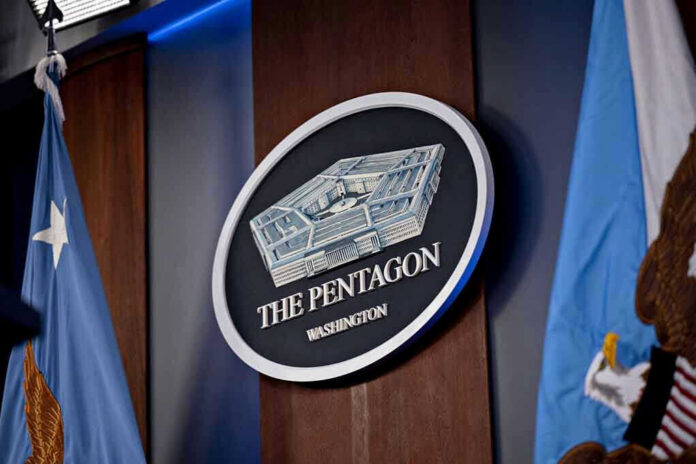
bingeworthynews.com — A new Trump directive quietly hands the Pentagon and the National Security Agency the keys to America’s frontier artificial intelligence future—and its cyber defenses.
Story Snapshot
- Trump’s team is drafting a frontier AI cybersecurity order that would centralize model review and incident response in the Pentagon and National Security Agency.[5]
- The White House cyber strategy explicitly makes securing the “AI stack,” data centers, and models a core national-security mission.[2]
- A new National Security Agency Artificial Intelligence Security Center is being built out as the hub for defending U.S. AI systems.[4]
- The broader Trump artificial intelligence framework pushes a single, minimally burdensome national policy that preempts conflicting state rules.[2]
Trump’s Emerging Frontier AI Security Playbook
Trump’s advisers are finalizing an executive order that would put the Pentagon in charge of rapidly hardening federal networks and critical systems against frontier artificial intelligence threats, while creating a voluntary review track for powerful new models.[5] According to reporting on the draft, the order’s first section gives the Department of Defense thirty days to secure key telecommunications and information systems, with a second section focused on so‑called “covered frontier models” that pose serious national security risks.[5] This reflects growing concern that hostile regimes and criminal cartels will weaponize cutting‑edge models for cyberattacks, information warfare, and infrastructure disruption if Washington stays stuck in yesterday’s playbook.[1][7]
CrowdStrike and other experts describe “frontier artificial intelligence” as the most advanced, general‑purpose models on earth—systems that can write code, craft malware, and automate attacks at a scale no human hacker could match.[7] Trump’s team is responding to that reality by sketching a framework where federal security agencies can review models before public release—on a voluntary basis—and coordinate with companies on vulnerabilities and incident response.[5][1] Cybersecurity Dive reports that earlier drafts would have allowed federal agencies to examine new models up to ninety days before launch, specifically to probe for security flaws and catastrophic misuse risks.[1][5] For conservatives worried about China and Iran racing to exploit these tools, the logic is simple: you secure the arsenal before the enemy steals it.
From Cyber Strategy to Artificial Intelligence Security Center
The frontier artificial intelligence order sits on top of a broader Trump cyber strategy that directly names artificial intelligence as a strategic asset that must be defended. The White House strategy pledges to “secure the artificial intelligence technology stack—including our data centers—and promote innovation in artificial intelligence security,” and to protect “the data, infrastructure, and models that underpin U.S. leadership in artificial intelligence.”[2] That means treating the supercomputers, cloud facilities, and training data that power American models the same way we treat aircraft carriers or missile defense sites: as core national‑security systems that must be hardened against espionage, sabotage, and outages.[2] In practice, that will require close cooperation between defense agencies, cloud providers, and model labs so that vulnerabilities are found and fixed before they become a headline‑making breach.[1][5]
The National Security Agency has already stood up an Artificial Intelligence Security Center that is poised to become a central player in this new framework.[4] The agency explains that the center is a key part of its cybersecurity mission, tasked with defending the nation’s artificial intelligence through intelligence‑driven collaboration with industry, universities, and foreign partners.[4] For a conservative audience, this looks less like building a new bureaucracy and more like putting our best codebreakers and spies on the job of protecting American algorithms from Chinese, Russian, and Iranian operators.[4] The center can give federal officials and private companies the classified threat intelligence they need to understand how foreign adversaries are trying to penetrate or subvert our models, and it can help align defensive standards across the government without dumping another stack of red tape on small businesses.[4][2]
Minimally Burdensome, National—and Controversial
This emerging frontier artificial intelligence security framework also plugs into Trump’s larger push for one national artificial intelligence rulebook instead of fifty conflicting state experiments. A December 2025 presidential action makes it official policy to “sustain and enhance the United States’ global artificial intelligence dominance through a minimally burdensome national policy framework for artificial intelligence.” That order directs the Attorney General to stand up an Artificial Intelligence Litigation Task Force whose sole mission is to challenge state artificial intelligence laws that obstruct this national policy, including on grounds that they interfere with interstate commerce or conflict with federal actions. For many conservatives, that is overdue: it reins in blue‑state politicians who want to micromanage tech from Sacramento or Albany while American companies are fighting Chinese competitors backed by Beijing’s industrial machine.[3][6]
The flash point: a voluntary framework requiring AI labs like OpenAI, Anthropic, and Google to give the White House early access to models before public release for cybersecurity evaluation. Trump nixed it May 21, saying it could stifle competition and weaken the US against…
— 38twelveDaily (@38twelveDaily) June 2, 2026
Critics, including civil‑liberties advocates, warn that the Trump framework leans too far toward protecting artificial intelligence companies and industry growth. They point out that the national framework is still a package of legislative recommendations, not a fully tested security regime, and argue that terms like “minimally burdensome” sound like code for deregulation and corporate immunity. They also note that the National Institute of Standards and Technology’s Artificial Intelligence Risk Management Framework remains voluntary guidance rather than binding law, raising doubts about whether the new Pentagon–National Security Agency coordination will translate into mandatory safeguards for every powerful model deployed across government. Yet those same critics have not produced detailed technical evidence showing that centralized federal coordination would fail to improve security against foreign cyber threats or insider misuse.[1]
Balancing Liberty, Innovation, and Survival in the Artificial Intelligence Age
Trump’s allies argue that the alternative to a coherent national frontier artificial intelligence security framework is not some ideal world of local experimentation, but a patchwork of rules that hostile powers will exploit.[2][6] If California, New York, and Washington each impose different disclosure and testing mandates on model developers, while Beijing uses state power to scale its own systems without constraint, American firms could be boxed in at home but still targeted abroad by weaponized foreign models.[6] A federal framework that centralizes security review in agencies like the Pentagon and the National Security Agency, anchored by voluntary but serious model assessments, aims to keep government light‑touch where possible while making sure someone is actually accountable for securing the frontier.[2][4][5]
For conservatives who care about limited government, constitutional federalism, and national survival, the debate is not whether artificial intelligence should be secured—it must be—but whether Washington can do it without smothering innovation or trampling states’ legitimate authority.[2][6] Trump’s current trajectory points toward a narrow, security‑focused role for the Pentagon and National Security Agency, backed by a single national policy that blocks activist states from using artificial intelligence rules as a backdoor for woke speech codes or anti‑business crusades.[2][3] The coming months in Congress will determine whether that balance holds, whether the framework gains real teeth, and whether America keeps its fragile lead over China in the most powerful technology since the internet.[5][7]
Sources:
[1] Web – Trump orders Pentagon, NSA to develop frontier AI security framework
[2] Web – Trump AI plan calls for cybersecurity assessments, threat info-sharing
[3] Web – [PDF] President Trump’s CYBER STRATEGY for America | The White House
[4] Web – Assessing Throughlines in the Trump Administration’s AI Regulatory …
[5] Web – Artificial Intelligence Security Center | National Security Agency
[6] Web – Technology, AI, and Cybersecurity: Law and Policy in Science …
[7] Web – Trump’s National AI Framework and Super Micro’s Chip Smuggling …
© bingeworthynews.com 2026. All rights reserved.