When one scare fizzles, another headline appears—yet the official line keeps repeating the same two words: low risk.
Story Snapshot
- World Health Organization messaging pairs “low risk” with open-ended vigilance and rolling updates [3][5].
- Calls for quarantine and strict monitoring surfaced around a small hantavirus cluster, despite reassurances [8].
- Africa health bodies urged surveillance upgrades even as they labeled risk low across the continent [1].
- Preparedness advocates argue crises expose chronic system failures that require constant attention [6].
How the “low risk, stay alert” formula shapes public perception
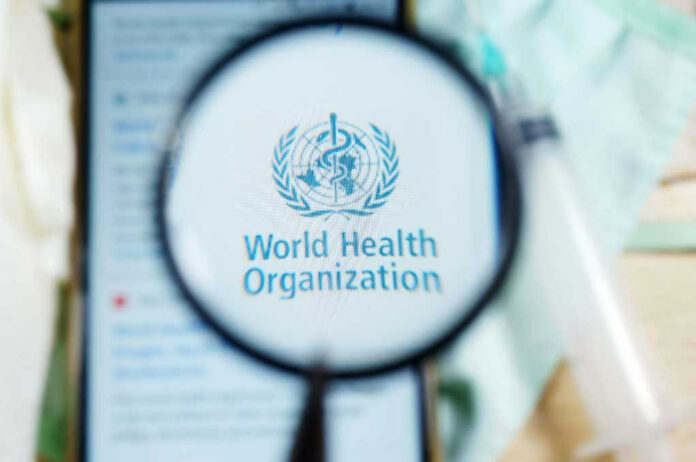
World Health Organization briefings on the recent hantavirus cluster underscored that global risk remains low while promising continued monitoring and updates. The Director-General said the event does not signal a larger outbreak, but the organization would keep informing the public as needed [5]. Global broadcast coverage repeated the low-risk assessment and the watchful stance, reinforcing a steady-state posture of vigilance rather than an explicit all-clear [3]. That pairing—reassurance alongside perpetual updates—keeps attention alive without declaring an emergency.
The Africa Centres for Disease Control and Prevention and the World Health Organization jointly urged authorities and the public to strengthen surveillance in Africa, again while stating the risk on the continent is low [1]. This dual message functions like a dimmer switch, not a light switch. It avoids panic while also avoiding closure. Critics read that as institutional self-preservation through evergreen warnings. Supporters call it disciplined risk communication under uncertainty. Both camps are reacting to the same sentences, parsed for intent.
Small numbers, big language, and the quarantine echo
Reports tied to the World Health Organization cited a handful of confirmed cases and several deaths in the hantavirus context—real events with tragic stakes for those families [5]. Even small clusters can justify medical containment tools, which is why a prominent health leader publicly endorsed strict quarantine and monitoring, advocating a six-week quarantine window on national television [8]. The image of quarantine carries heavy psychological weight. Viewers remember the measure, not the modifier “low risk.” That asymmetry fuels public suspicion of creeping alarmism.
Newsrooms naturally gravitate to the most cinematic policy lever on the table. Quarantine coverage travels farther than a paragraph on routine contact tracing. The result is a lopsided memory: the public stores the most restrictive idea and forgets the “not a big threat right now” caveat. From a conservative common-sense viewpoint, proportionality matters. If officials want public trust, they should match recommendations and tone to scale and provide a bright-line de-escalation trigger, not just open-ended monitoring.
Preparedness narratives and institutional incentives
Respected voices argue that the world is chronically underprepared and that capability must exist before the next spark ignites. One expert summarized the doctrine bluntly: preparedness is not built during a crisis press conference or after a pathogen has crossed borders [6]. That position explains the constant drumbeat—keep drills warm, keep systems funded, keep the public attentive. The logic is coherent. The trade-off is political: nonstop vigilance risks sounding like a standing request for blank checks, mission creep, and authority without sunset.
The lane between prudence and panic is narrow. The World Health Organization repeatedly labeled the hantavirus risk low while continuing updates and surveillance encouragement [1][3][5]. That record complicates a clean accusation of fear-mongering. Yet the communications pattern invites a fair question: when does the microphone turn off? Conservative instincts demand clear thresholds, measurable benchmarks, and time-limited powers. If agencies want citizens as partners, not skeptics, they should publish criteria to downgrade alerts as transparently as the criteria to raise them.
Sources:
[1] Web – Hantavirus Risk Low In Africa, But Preparedness Urged By WHO
[3] Web – WHO says risk from hantavirus to global population remains ‘low’
[5] YouTube – WHO Director-General Holds Press Conference on Hantavirus …
[6] Web – Ebola, hantavirus: We’re ill-prepared for global outbreaks – STAT News
[8] Web – New Ebola outbreak leaves 65 dead as officials warn of … – Fox News