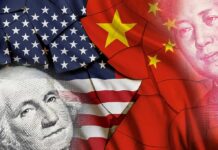
Congress just put a bullseye on Beijing’s role in America’s deadliest drug crisis, and the fight over what that really means is going to shape both your border security and your retirement portfolio.
Story Snapshot
- House Foreign Affairs members are probing whether China’s Communist Party is tied to the fentanyl pipeline killing Americans.
- Experts say China is central to the chemical supply chain, while Mexican cartels and U.S. demand drive the street carnage.
- Beijing rejects blame, and analysts warn against turning a complex drug network into a simple villain story.
- The outcome will steer sanctions, trade friction, and how Washington balances law enforcement versus public health.
Congress aims squarely at Beijing’s “poison pipeline”
House Foreign Affairs Committee leaders did not pick a neutral title when they scheduled a hearing called “Beijing’s Poison Pipeline: The Chinese Communist Party’s Role in the Fentanyl Crisis.” The East Asia and Pacific Subcommittee, chaired by Representative Young Kim, convened the session in Room 2172 of the Rayburn House Office Building to examine whether actions by the Chinese government and Chinese firms are fueling the synthetic opioid wave ravaging communities across the United States.[1][2][3] Lawmakers framed the issue as both a public health disaster and a national security test.
The witness list signaled that this was not just a political theater exercise. Members questioned David Luckey of the RAND Rural America Partnership Initiative, Steve Yates of the Heritage Foundation, and Zongyuan Zoe Liu of the Council on Foreign Relations.[1][2][4] That mix of defense-oriented, conservative, and mainstream foreign policy expertise reflected an effort to build a factual record on how Chinese companies, regulators, and criminal actors intersect with the fentanyl trade, and what levers America realistically has to push back.
How the fentanyl pipeline really works
Lawmakers and experts described a multi-stage pipeline, not a single mastermind pulling strings. The Drug Enforcement Administration has reported that China and Mexico have been primary source countries for fentanyl and related substances reaching the United States, with India as a lesser contributor. Brookings scholars further explain that China has been the principal global supplier of chemical precursors used to make fentanyl, while Mexican cartels turn those precursors into finished product for the U.S. market. American demand and porous borders complete the deadly circuit.
This structure matters because it separates three questions that get blurred in political soundbites: who makes the chemicals, who manufactures the drug, and who is responsible under international norms. Research indicates that Chinese companies dominate production of key precursor chemicals, often selling through online marketplaces and opaque intermediaries. Mexico’s major cartels then use those inputs to press pills and mix powders destined for American cities. That division of labor complicates any claim that Beijing “controls” the crisis, even if Chinese territory is central to the supply chain.
Is the Chinese state directing the crisis, or just tolerating it?
Even the hearing’s own setup shows this debate is unresolved. The title accuses the Chinese Communist Party of having a “role,” but the official hearing notices and documents do not present adjudicated findings that the Chinese state is orchestrating trafficking; they list witnesses and topics, not verdicts.[1][2] Brookings analysts caution that Chinese triads and other criminal groups do not dominate global fentanyl markets, and they distinguish between Chinese actors operating for profit and direct state control.[4][6] That nuance clashes with simple talking points but aligns better with the fragmented, entrepreneurial reality of synthetic drug networks.
Yet Congressional hawks argue that distinction only goes so far. A bipartisan investigation by a separate House select committee concluded that companies in China produce nearly all of the illicit fentanyl precursors powering the global trade, and that these firms operate within a regulatory and subsidy environment overseen by the Chinese Communist Party. Conservative policymakers contend that when an authoritarian state can closely monitor dissidents yet claims ignorance about mass-scale export of lethal chemicals, skepticism is common sense. From that lens, Beijing’s failure to shut down known exporters looks less like innocence and more like willful negligence.
Sanctions, trade pressure, and the risk of a new opium narrative
Members of Congress are not just holding hearings; they are writing laws aimed squarely at Chinese suppliers. The “Stop Chinese Fentanyl Act” seeks to tighten and expand sanctions on foreign opioid traffickers linked to China by amending the existing Fentanyl Sanctions Act.[3] Parallel hearings on sanctions policy examine how effectively the United States Treasury and other agencies have used blacklists, financial restrictions, and law enforcement tools to pressure companies and individuals in China tied to precursor exports.[6] These moves reflect a conservative instinct to use economic leverage rather than trust diplomatic assurances.
Beijing’s Poison Pipeline: The CCP’s Role in the Fentanyl Crisis | Congressional Hearing https://t.co/4cMPvyiyRN
The House Foreign Affairs Committee investigates "Beijing’s Poison Pipeline" and the Chinese Communist Party's (CCP) direct role in fueling the American fentanyl…— DefenseNow (@NowDefense) June 4, 2026
Policy researchers warn, however, that turning the crisis into a morality play about a foreign enemy can distract from domestic failures. Brookings and other analysts stress that while banning fentanyl production in China or tightening export rules can help, it cannot by itself “solve” a U.S. opioid crisis driven by demand, over-prescription history, and inadequate treatment infrastructure. Historical comparisons to nineteenth-century opium conflicts remind observers that narratives about corrupting foreign drugs can inflame nationalism on both sides, making practical cooperation harder even when interests overlap in combating criminal networks.
What this fight means for American security and sovereignty
For conservatives focused on sovereignty, borders, and rule of law, the key question is not whether China is the only villain, but whether Beijing is meeting basic responsibilities expected of a major power. Evidence that Chinese firms remain major suppliers of fentanyl precursors, years after repeated U.S. warnings and China’s own formal scheduling of the drug, suggests that compliance has been selective at best. Allowing shadowy exporters to keep shipping lethal chemicals while demanding respect as a responsible global player rings hollow to many in Washington.
At the same time, viewing fentanyl purely through a geopolitical lens risks missing a cold reality: even if China vanished from the trade tomorrow, synthetic chemists somewhere else would rush to fill the gap as long as American demand and cartel profits remain enormous. The most durable strategy will combine hard-nosed pressure on Chinese suppliers, tougher border and financial enforcement, and serious domestic reforms in treatment, prevention, and policing. The “poison pipeline” hearing is less an end point and more an early skirmish in a long campaign to align those pieces without sleepwalking into a new cold-war drug narrative that solves little at home.
Sources:
[1] Web – Subcommittee members hold hearing on “Beijing’s Poison Pipeline: The …
[2] YouTube – Beijing’s Poison Pipeline: The CCP’s Role in the Fentanyl Crisis
[3] YouTube – Tackling Fentanyl: The China Connection (EventID=108650)
[4] Web – House Passes Barr’s Stop Chinese Fentanyl Act to Hold CCP …
[6] Web – [PDF] Facing Fentanyl 301 Petition_Part1_A_(Narrative) (1).pdf – USTR
© bingeworthynews.com 2026. All rights reserved.