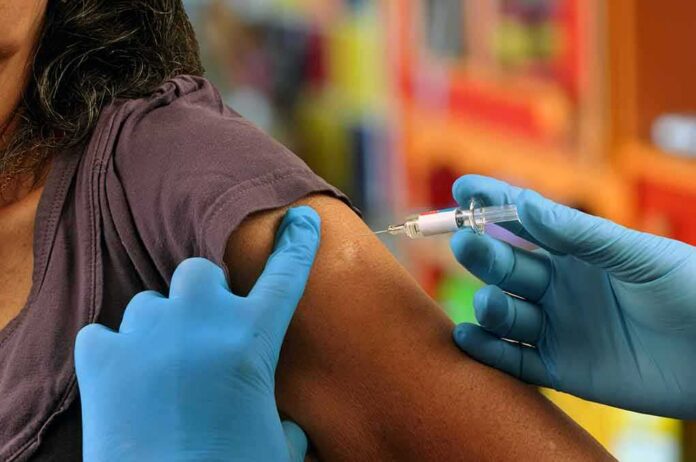
A rare Ebola strain has killed more than 800 people in Central Africa, and health officials still have no approved vaccine to stop it, even as they weigh which experimental shots to rush into emergency trials.
Story Snapshot
- Confirmed Bundibugyo Ebola cases topped 2,100, with more than 800 deaths reported by mid-July 2026.
- The World Health Organization (WHO) and the Centers for Disease Control and Prevention (CDC) confirm no licensed vaccine or specific treatment exists for this Ebola strain.
- WHO says talks are underway to pick vaccine candidates for emergency human trials.
- Weak health systems and security problems in eastern Congo could make any trial hard to run.
Outbreak Numbers Keep Climbing
The Bundibugyo virus disease outbreak in the Democratic Republic of the Congo and Uganda is still growing. As of mid-July 2026, the World Health Organization counted 2,124 confirmed cases and 828 deaths, most of them in the Democratic Republic of the Congo. United Nations officials say the disease is spreading faster than health workers can keep up with it, and the World Health Organization has declared it a public health emergency of international concern.
Health workers rely on case finding, isolation, contact tracing, and safe burial practices to slow the spread. The World Health Organization says strong community trust is just as important as medical tools, since fear and confusion can push sick people away from care instead of toward it.
No Approved Vaccine Leaves a Gap
Unlike the more familiar Ebola virus, the Bundibugyo strain has no approved vaccine or specific treatment. The World Health Organization says plainly that “no approved vaccines or specific treatments currently exist” for this disease. Doctors Without Borders, known by its French initials MSF, confirms the same gap, and the European Union’s diplomatic service says there are not even fast, reliable tests to diagnose it at scale.
That gap matters because doctors are left treating symptoms rather than stopping the virus directly. Supportive care, like fluids and monitoring, is currently the only option once someone is infected. This is one reason officials are pushing so hard to find a vaccine before the outbreak grows any larger.
Vaccine Candidates Under Review for Emergency Trials
Officials are now looking at what could come next. MSF reports that discussions are underway inside the World Health Organization to decide which vaccine candidates might be tested in emergency clinical trials against the Bundibugyo virus. This marks an early step toward human testing, not a finished product. No candidate has been approved, and none has published results showing it works against this specific strain.
The public record does not yet include a released trial protocol, a list of participants, or safety data from any human study tied to this outbreak. Without those documents, it is hard to say how far along any trial actually is, or what results, if any, have come back so far.
Operational Hurdles Facing Any Trial
Even if a vaccine trial moves forward, running it will not be easy. The World Health Organization, the European Union, and MSF all describe conflict and access problems in the affected parts of eastern Congo. Fighting, damaged roads, and thin health infrastructure can all slow down efforts to recruit patients, deliver shots, and follow up with people afterward.
The Centers for Disease Control and Prevention says the outbreak has not spread to the United States, and the risk to Americans remains low. Still, the agency has kept entry screening and travel notices in place for people arriving from affected countries, showing how seriously international health agencies are treating the situation even far from the outbreak zone.
What Remains Unclear
Because no protocol or trial results have been made public, it is not yet possible to confirm details like which vaccine platform is being tested, how many people are enrolled, or whether early safety signals look positive. Health officials facing urgent outbreaks often move quickly, but quick action does not mean proof of effectiveness. That distinction matters for anyone trying to judge how close a real solution actually is.
A major Ebola outbreak is currently spreading across the Democratic Republic of the Congo and Uganda, prompting the World Health Organization to declare a Public Health Emergency of International Concern. This 2026 epidemic is being driven by the rare Bundibugyo virus strain pic.twitter.com/RlPdcEoRhN
— Afridiaspo.net (@Afri_diaspo) July 23, 2026
For now, the clearest facts are these: the outbreak keeps growing, no vaccine is approved, and international health bodies are actively weighing emergency trial options. Whether those efforts turn into a working vaccine soon will depend on data that has not yet been shared with the public.
Sources:
insiderpaper.com, who.int, news.un.org, msf.org, eeas.europa.eu, cdc.gov
© bingeworthynews.com 2026. All rights reserved.