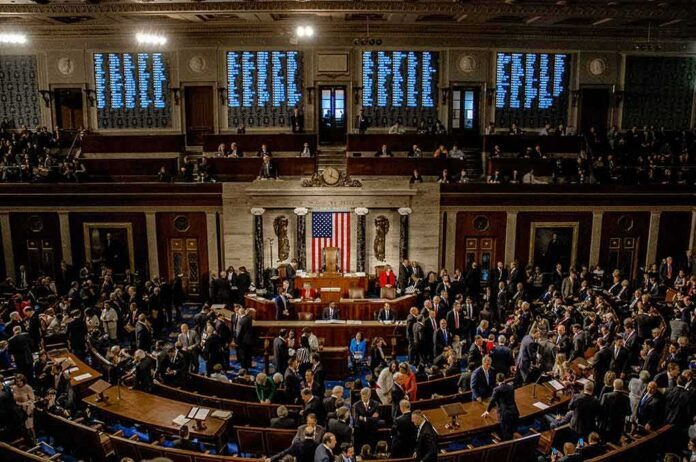
A sweeping Democratic takeover threatens to shrink or reshape President Trump’s $1.5 trillion defense plan and put Secretary Pete Hegseth under heavy oversight.
Story Highlights
- The administration formally requested $1.5 trillion for defense in FY2027, a 42% jump over current levels.
- The plan funds troop pay, modernization, and industrial-base rebuilding, with clear buckets for procurement and research.
- Key committees initially backed the discretionary topline, but funding still hinges on appropriations and reconciliation.
- Democrats now vow tough oversight, spending trims, and potential leverage over Hegseth’s future.
What The Administration Proposed And Why It Matters
The Department of War released a formal Fiscal Year 2027 request of $1.5 trillion, describing it as a generational investment and a 42% increase over current funding. Secretary Pete Hegseth said the request delivers on President Trump’s promise to expand American military dominance. The plan highlights support for service members and families, major equipment upgrades, stronger homeland security, and a raise for the force. These are core conservative priorities: pay our troops, rebuild strength, and deter rivals.
The proposal divides money into clear parts lawmakers can judge. The request includes about $1.1 trillion in discretionary funding and $350 billion in mandatory funding. It sets large sums for procurement and for research, development, testing, and evaluation. That structure lets Congress debate individual weapons, shipyards, and factory lines on their own merits, even if they do not accept the full topline. It gives supporters a way to defend what helps readiness fastest.
Where Congress Stands After The Election Shock
Before the election, both the House and Senate Armed Services Committees moved to authorize around the level the President asked for in discretionary accounts. That marked about a 28% increase over the prior year’s authorization levels. But authorization is not spending. The Congressional Research Service notes the National Defense Authorization Act does not provide budget authority. Actual dollars flow only after appropriations and other laws pass. That is the next battlefield.
The plan’s mandatory slice is the soft spot. The $350 billion increase relies on a reconciliation path outside normal appropriations. That route is hard in a divided Washington and is now even tougher after a Democratic sweep. Analysts warned that a Democratic chamber could block or reshape that piece, and might demand nondefense hikes in trade. The risk is simple: the headline $1.5 trillion could shrink fast in the bill-writing grind.
Democratic Control Raises Oversight And Cut Risks
Rep. Adam Smith, expected to lead the House Armed Services Committee, pledged intensive oversight of the Pentagon and Secretary Hegseth. He said the panel would probe the administration’s defense budget. Reports also describe Democrats seeking hundreds of billions in reductions and tighter rules on operations such as actions linked to Iran. These moves threaten the speed and scale of the buildup President Trump proposed.
Senate Democrats are also signaling leverage. Reporting describes threats to hold up defense bills and even a Navy secretary waiver while floating Hegseth’s removal as a price for cooperation. Commentary quotes Democratic leaders vowing to “run Pete Hegseth out of town,” and outlines plans to use hearings, investigations, and conditions on the annual bill to box in policy. Expect subpoenas, contract scrutiny, and performance grilling that slow delivery to the field.
What Conservatives Should Watch Next
First, track appropriations and any reconciliation language. That is where the topline becomes real or gets pared back. Second, focus on procurement lines and factory ramp-ups that rebuild the defense industrial base. If those lines fund on time, shipbuilding, munitions, and air defense capacity can still surge even under tighter ceilings. Third, watch for conditions that restrict commanders in the field. Overreach can tie down operations and embolden adversaries.
Finally, press for transparent measures of readiness and delivery. The administration’s case is strongest when dollars close clear gaps and raise output fast. Production capacity, delivery schedules, and troop pay are concrete wins voters can see. President Trump set the vision; now Congress must fund it without larding on social agendas or political vendettas. The mission is simple: keep America’s edge, pay our troops well, and rebuild the arsenal that keeps our families safe.
Sources:
congress.gov, war.gov, csis.org, abcnews.com, hklaw.com, yahoo.com, rollcall.com, thehill.com
© bingeworthynews.com 2026. All rights reserved.