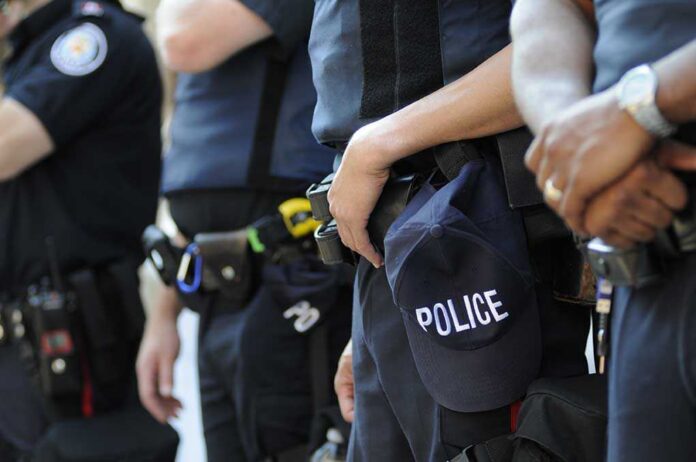
A Maryland appeals court just told police they cannot treat every gun owner like a criminal, and that changes the rules for stop‑and‑frisk in a big way.
Story Snapshot
- Maryland’s Appellate Court ruled police cannot stop someone based only on suspected handgun possession.
- The court said handgun carry is now “presumptively lawful,” so officers need more facts to justify a stop.
- The stop and frisk of Baltimore resident Steven Hicks was ruled unconstitutional and the evidence suppressed.
- The ruling ties gun rights to search-and-seizure limits, echoing the Supreme Court’s Bruen decision on public carry.
Maryland Court Says Gun Carry Alone Is Not A Crime
The Appellate Court of Maryland ruled that police may not stop a person just because they suspect that person is carrying a handgun.[2] Reporting on the decision explains that the court held “the possession of a handgun is presumptively legal” in Maryland and that, without a presumption of illegality, “mere possession of a handgun is not, by itself, indicative of criminal activity that justifies an investigatory stop.”[2] The official opinion in Steven Hicks v. State of Maryland states plainly that “the stop and frisk here were unconstitutional.”
The case centers on Baltimore resident Steven Hicks, who was stopped and frisked after officers suspected he had a handgun.[1] Officers did not report any other criminal conduct beyond possible gun possession. The appellate judges concluded that treating suspected possession alone as enough for a stop violated the Fourth Amendment protection against unreasonable searches and seizures. This means officers now need some extra fact suggesting illegal carry or other crime, not just that a person might have a firearm.[2]
How The Ruling Connects Second Amendment And Fourth Amendment Rights
Coverage of the decision notes that the Maryland court leaned on the Supreme Court’s New York State Rifle & Pistol Association v. Bruen ruling, which recognized a broad right to carry firearms in public for self‑defense.[6] Commentators explain that, after Bruen, if public carry is constitutionally protected, then simply carrying a firearm cannot automatically be treated as evidence of criminal activity.[6] The Maryland court therefore said police cannot assume a gun carrier is breaking the law just because licensing rules exist.[2]
A detailed breakdown of the 130‑page opinion highlights two key parts of the ruling.[6] First, a stop requires reasonable suspicion that criminal activity is afoot, and the court said the “mere possibility” that someone might lack a handgun license does not meet that standard.[6] Second, the court separated the rules for a stop from the rules for a frisk, following Terry v. Ohio.[3] The judges stressed that a lawful stop can still justify a limited pat‑down when there is reason to believe the person is armed and dangerous, but the State must first clear the hurdle for a lawful stop.[3]
What This Means For Police, Gun Owners, And Future Battles
Maryland law already allows an officer to question and, in some cases, pat down a person when the officer reasonably believes the person is wearing or carrying a handgun in violation of state law and may be dangerous.[8] The Hicks ruling does not erase that statute. Instead, it tightens how officers get to that point. They must now point to specific facts, beyond simple gun possession, that suggest the carry is illegal or tied to another crime before they detain someone.[2][3] That aligns with long‑standing Terry standards that demand “specific and articulable facts,” not mere hunches.[3]
Legal analysts place Hicks inside a broader pushback against abusive stop‑and‑frisk tactics nationwide.[1][5] Federal courts have already ruled that large‑scale stop‑and‑frisk programs in New York City violated the Fourth Amendment and the Fourteenth Amendment by targeting people without proper suspicion and by using indirect racial profiling.[1][5] Those decisions did not end stop‑and‑frisk, but they forced police to meet real constitutional standards.[5] Maryland’s new ruling adds a strong gun‑rights dimension, making clear that as public carry expands, officers cannot default to treating every armed citizen as a suspect.[2][6]
Sources:
[1] Web – Maryland Court Rules Against Unconstitutional Stop-and-Frisk in …
[2] Web – Stop-and-Frisk Practice Violated Rights, Judge Rules
[3] Web – Police can’t make stops based solely on gun possession, MD court …
[5] Web – Understanding Fourth Amendment Rights in Maryland
[6] YouTube – How A 130-Page Appellate Ruling Just Rewrote Police Stop-And …
[8] Web – Suspicious Bulges, Reasonable Suspicion, and the Boundaries of a …
© bingeworthynews.com 2026. All rights reserved.