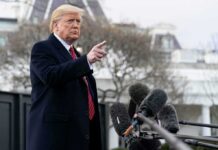
President Trump reversed course from threatening “annihilation” to embracing Iran’s sweeping 10-point peace plan as a “workable basis” for ending a six-week war, raising questions about whether American leverage has been surrendered in a fragile ceasefire that could reshape Middle East power dynamics.
Story Snapshot
- Two-week ceasefire begins after Trump agrees to suspend strikes on Iranian infrastructure in exchange for reopening the Strait of Hormuz
- Iran’s 10-point proposal demands sanctions relief, compensation, control over uranium enrichment, and protection for proxy forces like Hezbollah
- Tehran claims “historic victory” while treating diplomacy as an extension of battlefield strategy, refusing temporary truces for permanent war end
- Vice President Vance warns truce remains “fragile” as formal negotiations scheduled for Friday in Islamabad under Pakistani mediation
Trump’s Dramatic Pivot From Threats to Endorsement
President Trump shifted from ultimatums to acceptance within hours on Tuesday, April 7, 2026, agreeing to halt bombing campaigns against Iranian bridges and power plants after Tehran submitted a comprehensive peace framework. The ceasefire took effect Tuesday evening following a tense 24-hour period where Trump demanded Iran cease uranium enrichment and threatened strikes by an 8 PM deadline. His social media posts reflected the whiplash, moving from warnings that Iran’s “whole civilization will die” to declaring the Islamic Republic’s proposal worthy of serious negotiation. The reversal came after six weeks of conflict that began February 28 when US and Israeli forces launched coordinated operations against Iranian targets.
The about-face reflects mounting pressure from oil market disruptions caused by Iran’s closure of the Strait of Hormuz, through which 20 percent of global petroleum supplies transit. Vice President J.D. Vance publicly characterized the truce as precarious, acknowledging immediate strains despite the conditional halt to hostilities. Pakistan’s Prime Minister Shehbaz Sharif and Army Chief Asim Munir brokered the pause after Iran rejected previous 45-day ceasefire proposals from Egypt, Pakistan, and Turkey. Trump’s willingness to engage with what US officials privately label a “maximalist” Iranian framework signals pragmatic recognition that prolonged conflict carries economic and political costs his administration cannot sustain indefinitely.
Iran’s Comprehensive Demands Challenge American Red Lines
Iran’s Supreme National Security Council submitted a 10-point plan demanding comprehensive sanctions relief, financial compensation for war damages, unfettered control over the Strait of Hormuz, and cessation of attacks on regional proxy forces including Hezbollah. The framework insists on Tehran’s right to continue uranium enrichment without restrictions, directly contradicting Trump’s earlier ultimatum requiring Iran to surrender existing stockpiles and halt further nuclear fuel production. Foreign Minister Abbas Araghchi formalized the position, crediting Pakistani mediation while emphasizing Iran’s refusal to accept temporary measures. The plan also calls for termination of UN Security Council and IAEA resolutions targeting Iran’s nuclear activities, alongside non-aggression guarantees from Washington.
Tehran framed the ceasefire as a strategic victory, with state media portraying the pause as forcing American capitulation rather than genuine compromise. Iran’s Supreme National Security Council declared through Tasnim News that diplomacy represents an “extension of the battlefield,” explicitly warning against trusting US commitments. The Islamic Republic mobilized 14 million volunteers during the conflict, including its president, demonstrating domestic resolve to resist foreign pressure. This massive civilian mobilization signals Iran’s calculation that it can outlast American military campaigns through societal cohesion and economic endurance, despite facing threats to critical infrastructure. The Council insists any agreement must permanently end hostilities rather than merely postpone them.
Global Energy Markets and Geopolitical Realignment at Stake
The Strait of Hormuz closure during the conflict spiked global oil prices, threatening to exacerbate inflation that already frustrates American consumers facing high energy costs. Reopening the waterway represents Trump’s immediate priority, though Iran’s conditional compliance creates vulnerability to renewed disruptions if negotiations collapse. Gulf Arab states face retaliatory risks if fighting resumes, as Iran threatened attacks on regional energy facilities during the escalation. The ceasefire’s fragility raises concerns that American concessions could embolden Iranian influence across the Middle East, particularly regarding proxy forces that Israel views as existential threats. Prime Minister Benjamin Netanyahu expressed reservations to Trump over the weekend, pressing for guarantees that any deal curtails Iranian support for Hezbollah and other militant groups.
Friday’s planned talks in Islamabad will test whether Trump’s characterization of Iran’s plan as “workable” translates into substantive American concessions or represents tactical positioning ahead of hard bargaining. The administration faces competing pressures from allies like Israel demanding tougher terms and domestic constituencies exhausted by war costs and energy price volatility. Pakistan’s successful mediation elevates Islamabad’s regional diplomatic profile while potentially sidelining traditional American partners like Egypt and Turkey who failed to broker earlier truces. The outcome will determine whether Trump’s America First approach can extract favorable terms through credible military threats or whether Iran’s resilience forces Washington to accept a Middle East where Tehran operates with greater autonomy over nuclear programs and regional proxies.
Sources:
Ceasefire Day 1: Iranian 10-Point Peace Plan ‘Workable Basis,’ Per Trump – The American Conservative
Trump agrees to 2-week ceasefire, says Iran has proposed a ‘workable’ 10-point peace plan – Fortune
What is in Iran’s 10-point peace plan? – The National News
Iran submits peace plan to Trump amid ceasefire talks – Axios