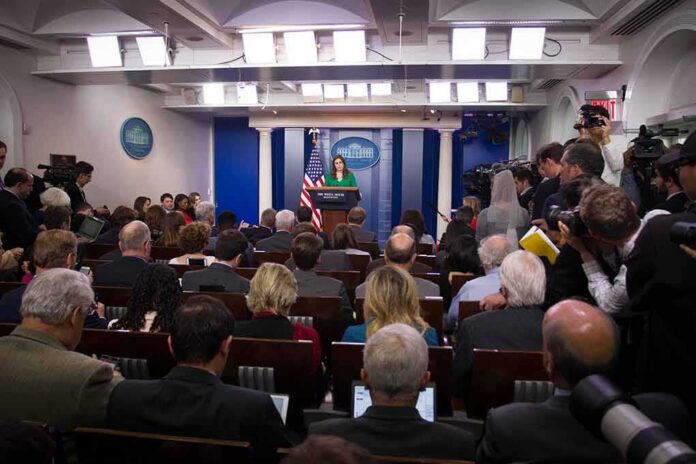
President Trump named Katie Zacharia press secretary, then reconsidered her future within days, revealing a fast-moving selection process that left Washington buzzing.
Story Highlights
- Trump announced Katie Zacharia as press secretary on October 11, 2026.
- The White House documented Zacharia as the 37th press secretary on October 13.
- Reports days later said she was out after five days, amid rapid reassessment.
- Trump publicly asked whether the role was right for her after harsh media treatment.
Trump’s Public Selection And Fast Start
President Trump personally announced Katie Zacharia as White House press secretary on October 11, 2026, signaling a direct and hands-on staffing call from the Oval Office. The White House then described Zacharia as the 37th press secretary and highlighted her first full briefing on October 13. Zacharia said she was honored to serve President Trump and the American people, and she stepped to the podium that same week for her initial session with reporters, marking an official, on-camera start.
White House materials framed her debut as confident and focused, with the press office reinforcing her status in an official release. The on-camera briefing established her role to the press corps and the public. The formal sequence—presidential announcement, White House release, and briefing—showed a standard handoff. It also set clear public markers for the timeline, which later took on new weight as events moved quickly in the days that followed.
Rapid Reassessment After A Rocky Week
Within five days of the announcement, major outlets reported that Zacharia was out, citing senior administration officials and sources familiar with the decision. President Trump acknowledged he had spoken with her about whether the job was the right fit, noting she had been treated “very rough” by media critics. The reported change echoed a broader pattern in modern Washington of quick course corrections in high-pressure communications roles when narratives harden early and distractions pile up.
NBC News reported that the President told Zacharia to decide if she would stay in the job, even as officials suggested her tenure had ended. Politico quoted Trump saying he raised the fit question with her directly and tied that to the intense blowback she faced in the spotlight. That sequence shows a leader demanding performance under fire while recognizing when the media swarm turns the press office into the story. It also underscores how speed matters when defending an agenda under constant attack.
What We Know—and What We Do Not
The public record confirms three fixed points: Trump made the pick on October 11, the White House documented her as press secretary with an official release and briefing on October 13, and reputable outlets reported a reversal roughly five days later. Reporting also captured Trump’s on-the-record comments questioning whether Zacharia should continue after harsh treatment from the press. Those facts are firm. They define a compressed arc, from selection to on-camera debut to reassessment, in under a week.
🚨 BREAKING: Trump reportedly picks Katie Zacharia as the next White House press secretary.
She currently advises Trump Media & Technology Group.Do you think she’s the right choice? ❤️ pic.twitter.com/4EwT1o6dc6
— 𝙻𝚞𝚗𝚊 𝙶𝚛𝚊𝚌𝚎🇺🇸 (@itslunara0z) October 17, 2026
The claim that Trump preferred someone else first remains unconfirmed in available official records. The White House materials describe Zacharia’s appointment and performance but do not name an earlier candidate or document a prior offer. Without a name and dated record, the alleged first choice cannot be independently checked against statements or schedules. Readers should focus on what is documented: the pick, the briefing, the intense media pressure, and the quick pivot anchored by on-record presidential remarks.
Why This Matters To Conservative Readers
This episode shows how a hostile press can try to cripple a message operation before it gets traction. The press secretary job is not about pleasing networks; it is about speaking for the President and the American people. When media pile-ons become the story, the administration must adapt fast to keep focus on borders, energy costs, crime, and the economy. Trump’s swift reassessment signaled that execution and clarity come first, even if it means changing course in days.
What Comes Next For The Briefing Room
The next press secretary will need sharp command of facts, tight discipline, and a thick skin. Reporters will push personal narratives to score points. The White House will need a spokesperson who brings message control, legal and policy fluency, and the grit to push back. The timeline here shows the standard: secure the podium, hold the briefing, measure impact, and adjust. Expect the administration to prioritize stability and strength so policy and results—not media drama—drive the news.
Sources:
thegatewaypundit.com, whitehouse.gov, nbcnews.com, cnbc.com
© bingeworthynews.com 2026. All rights reserved.