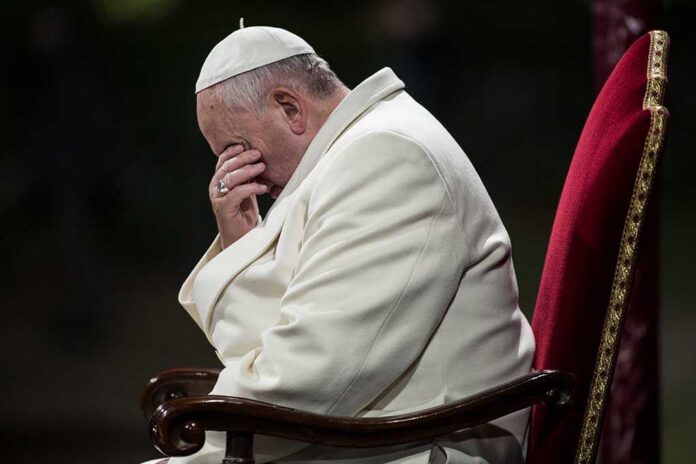
President Trump launched an unprecedented attack on Pope Leo XIV, declaring “I’m not a fan” and accusing the first American pontiff of being weak on crime and soft on nuclear proliferation—a shocking clash between the White House and the Vatican that exposes deep divisions over U.S. foreign policy and national security.
Story Snapshot
- Trump publicly slammed Pope Leo XIV as “very liberal” and weak on crime after the Pope criticized U.S. military actions in Iran and Venezuela
- The President accused the pontiff of tolerating Iran’s nuclear ambitions and catering to the “Radical Left” during ongoing ceasefire negotiations
- Pope Leo XIV suggested a “delusion of omnipotence” drives the U.S.-Israel war in Iran, drawing Trump’s ire at a critical diplomatic moment
- Analysts describe the public feud as extraordinarily rare, highlighting tensions between papal calls for peace and America First foreign policy
Trump’s Tarmac Rebuke Breaks Diplomatic Norms
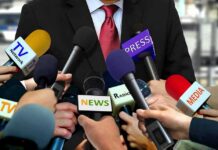
President Trump delivered scathing remarks about Pope Leo XIV to reporters Sunday evening after deplaning from Florida to Washington, doubling down on a social media post that branded the pontiff as dangerously soft on national security threats. Trump stated bluntly, “We don’t like a pope that’s going to say that it’s okay to have a nuclear weapon,” referring to Iran’s nuclear program. The President characterized Leo as “a very liberal person” who “doesn’t believe in stopping crime,” framing the Pope’s positions as aligned with radical leftist ideology that undermines American strength and security.
The public confrontation represents an exceedingly rare breach of the traditionally respectful relationship between U.S. presidents and the Vatican. Trump’s broadside extends beyond theological disagreements into pointed critiques of the Pope’s stances on crime, nuclear proliferation, and drug trafficking—issues central to the administration’s domestic and foreign policy agenda. America Magazine noted the “stinging” nature of Trump’s response, emphasizing how unusual such direct presidential attacks on a sitting pope have been throughout modern history, signaling a fundamental breakdown in diplomatic courtesy.
Vatican Peace Calls Clash With Military Actions
Pope Leo XIV presided over an evening prayer service Saturday at St. Peter’s Basilica, where he suggested that a “delusion of omnipotence” fuels the ongoing U.S.-Israel war in Iran. The timing proved particularly provocative, as U.S.-Iran face-to-face negotiations commenced the same day in Pakistan amid a fragile ceasefire. The Pope also criticized U.S. military strikes against Venezuela, which the Trump administration justified as necessary actions against drug trafficking networks threatening American communities. These papal statements directly challenged the administration’s narrative that military force serves legitimate security interests.
Trump’s social media post Sunday night accused Pope Leo of undermining crucial national security efforts, declaring the pontiff “WEAK on Crime” and warning that he “doesn’t want a Pope who thinks it’s OK for Iran to have a Nuclear Weapon.” The President claimed Leo should “stop catering to the Radical Left” and suggested the Pope’s American background and election to the papacy were strategically timed to counter Trump’s presidency. This assertion—that Leo’s ascension represents political maneuvering rather than spiritual leadership—adds a conspiratorial dimension to the dispute, implying coordinated resistance from global elites.
National Security Versus Moral Authority
The clash highlights fundamental disagreements over how America should wield power internationally. Trump’s supporters, particularly conservative evangelicals who claim divine backing for the Iran war, view the Pope’s peace advocacy as naive and dangerous appeasement of enemies like Iran. From this perspective, Leo’s calls for restraint ignore real threats from nuclear proliferation and international crime networks that imperil American lives. The administration’s position holds that strength through military action and zero tolerance for criminal regimes protects citizens better than diplomatic overtures that adversaries exploit.
Critics of Trump’s approach see the Pope’s intervention as a necessary moral check on what they perceive as militaristic overreach driven by political calculations rather than genuine security needs. Pope Leo wields spiritual influence over 1.3 billion Catholics worldwide, giving his critiques significant weight even as Trump holds executive authority over U.S. military operations. The power dynamics reveal tensions between temporal government authority and religious moral leadership, with both figures claiming to represent higher principles—Trump citing his 2024 election mandate, Leo invoking Catholic social teaching on peace and human dignity.
Political Fallout and Deepening Divisions
The public feud carries short-term risks of escalating U.S.-Vatican tensions precisely when delicate Iran ceasefire negotiations require diplomatic stability. American Catholics face increased polarization, forced to navigate loyalties between their faith leader’s peace advocacy and a president many supported for his conservative policies on issues like abortion and religious freedom. Trump’s evangelical base appears unmoved by papal criticism, viewing Leo as politically compromised rather than spiritually authoritative. This reinforces perceptions among many Americans—left and right—that powerful institutions serve elite agendas rather than ordinary citizens’ interests.
Long-term implications could reshape church-state relations if the war in Iran prolongs or Venezuela operations expand. The Vatican’s response remains notably absent from public view, leaving observers uncertain whether Pope Leo will counter Trump’s accusations or pursue quiet diplomacy. AP analysis suggests Trump’s motivations extend beyond Iran policy to personal and political grievances, using the Pope as a foil to energize his base around crime and national security themes. Either way, the spectacle of a sitting president openly feuding with the Pope underscores broader breakdowns in norms and institutions that once commanded bipartisan respect.
Sources:
Trump slams Pope Leo, says ‘I’m not a fan’ over crime and nukes – America Magazine