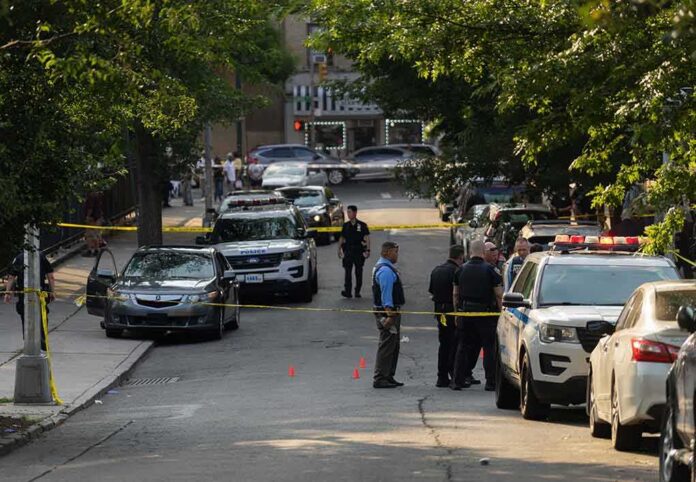
Police say a traffic stop led to a search that uncovered multiple firearms at an address tied to Rep. Ilhan Omar’s adult son’s roommate, sharpening questions about guns, due process, and political spin.
Story Snapshot
- Officers reported seizing multiple guns and ammunition after a traffic stop led to a residential search.
- Police reportedly arrested Abdulrahman Abdi on a weapons charge and booked him into county jail.
- No reports said Rep. Omar or her son, Adnan Hirsi, were arrested or charged.
- Reports have not independently confirmed Hirsi’s residency at the searched apartment.
What Police Say Happened
Fox News reported that Minneapolis officers stopped Abdulrahman Abdi for a canceled or invalid license and no insurance, impounded his car, and found a firearm. Officers then obtained a search warrant for a residence linked to him. Police executed the warrant and reported seizing multiple firearms and ammunition from the home. The Washington Times said officers arrested Abdi and booked him on a weapons charge, and that he was released the next day.
Several outlets described the residence as one shared by Abdi and Rep. Ilhan Omar’s adult son, Adnan Hirsi. Reports did not state that Omar or Hirsi were arrested, charged, or publicly named as suspects. Some coverage emphasized Omar’s past stance on gun control, but available reports focused on Abdi’s alleged conduct and the weapons found in the home.
Key Facts Still Missing From Public View
Reports did not publish the search warrant affidavit, warrant number, or the official inventory of seized items. That means the public has not seen the full grounds for the search or a verified list of evidence collected. The Hindustan Times reported there is no independent confirmation that Hirsi actually lived at the searched address. That gap affects how headlines frame whose “home” was searched.
Coverage called Abdi a convicted felon, which would make firearm possession unlawful. However, reporting did not cite a specific conviction record, case number, or judgment to confirm that detail in public documents. The absence of those records in coverage does not erase the allegation; it only shows the limits of what has been published so far.
How Prosecutors Might Build A Case
Prosecutors often use a theory called “constructive possession.” That means a person can be legally responsible for a gun not on their body if they had the power and intent to control it. Courts apply strict standards when a home or car is shared. Mere presence near a gun is not enough on its own to prove control. In shared spaces, prosecutors usually seek fingerprints, DNA, statements, or other proof that ties a person to a specific weapon.
Here, the most relevant facts will include where each gun was found, whose room or container it was in, and what evidence shows who knew about it. Body-camera footage, evidence photos, and lab reports can matter. If the charge relies on Abdi’s alleged status and control of guns in shared rooms, the state will likely need more than proximity. Courts have said group control of a home does not automatically prove any one person possessed a gun.
Why This Story Hits A Nerve
Americans across the spectrum see a pattern: loud headlines, thin documents, and partisan framing. This case touches hot buttons on guns, fair policing, and trust in institutions. Many people believe the powerful play by different rules than everyone else. Others worry police cut corners when a case turns political. The facts so far show a routine path—traffic stop, car tow, gun found, warrant, home search, reported arrest—now pulled into a national fight over power and principle.
Sources:
redstate.com, foxnews.com, thesfnews.com, dailymail.com, hindustantimes.com, political.org, wheninyourstate.com
© bingeworthynews.com 2026. All rights reserved.