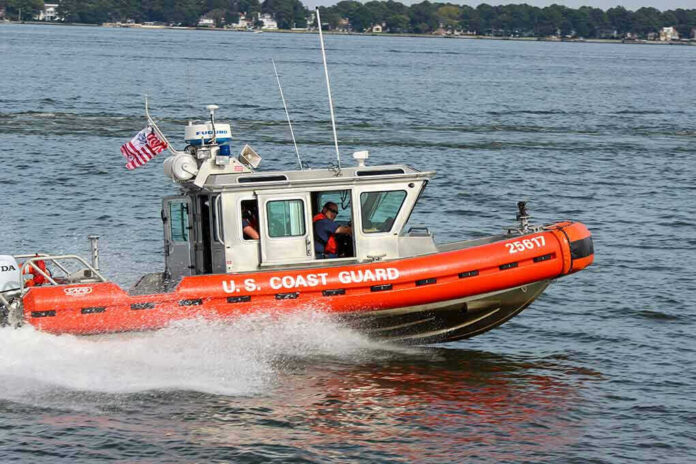
The U.S. Coast Guard is engaged in a high-seas chase of an oil tanker that refused to allow American forces aboard, marking an unprecedented escalation in Trump’s crackdown on Venezuela’s shadow fleet operations.
Story Snapshot
- Coast Guard pursuing tanker in Caribbean after vessel refused boarding on Sunday
- One oil tanker already seized Saturday carrying sanctioned Venezuelan crude
- Trump administration targeting “shadow fleet” helping Venezuela evade sanctions
- Chase involves vessels not explicitly on sanctions lists, raising maritime law questions
- Pursuit represents most aggressive enforcement action against Venezuelan oil exports to date
Shadow Fleet Operations Under Fire
Venezuela has deployed a sophisticated network of tankers to circumvent U.S. sanctions imposed since 2019. These vessels, many owned by Hong Kong-based companies, employ flag-hopping and ship-to-ship transfers to mask the origin of sanctioned crude oil. The shadow fleet has become Venezuela’s economic lifeline, enabling the Maduro regime to export oil worth billions despite American restrictions targeting the state-owned PDVSA oil company.
The current pursuit began Sunday when Coast Guard forces attempted to board a tanker operating in Caribbean waters. Unlike Saturday’s successful seizure of a vessel carrying confirmed Venezuelan oil, this tanker refused to comply with boarding orders, triggering an ongoing chase that has stretched into its third day. The vessel’s defiance represents a direct challenge to U.S. maritime enforcement authority in international waters.
Legal Gray Zone Enforcement
The most troubling aspect of this pursuit involves targeting vessels that may not appear on official sanctions lists. According to maritime law experts, including NYU professor Alejandro Velasco, the U.S. is pursuing tankers based on suspected connections rather than explicit sanctions violations. This approach pushes the boundaries of international maritime law and sets a concerning precedent for extraterritorial enforcement.
Velasco notes that oil represents Venezuela’s core vulnerability, comprising 90 percent of the country’s export revenue. By expanding enforcement beyond clearly sanctioned vessels, the Trump administration signals its intent to strangle Venezuela’s oil trade through aggressive interdiction tactics that may lack solid legal foundations under international law.
Escalating Caribbean Tensions
This maritime confrontation unfolds against broader U.S.-Venezuela tensions that have intensified since Trump’s return to office. The administration has reimposed “maximum pressure” sanctions, viewing Venezuela’s oil exports as the regime’s primary source of survival funding. The current chase represents the most dramatic enforcement action yet, with potential implications for regional stability.
The involvement of Iranian oil in Venezuela’s shadow fleet operations adds another layer of complexity to these pursuits. U.S. officials have linked the targeted vessels to a broader Venezuela-Iran partnership that helps both countries evade American sanctions through coordinated shipping networks. This connection provides justification for aggressive enforcement while raising stakes for potential confrontation.