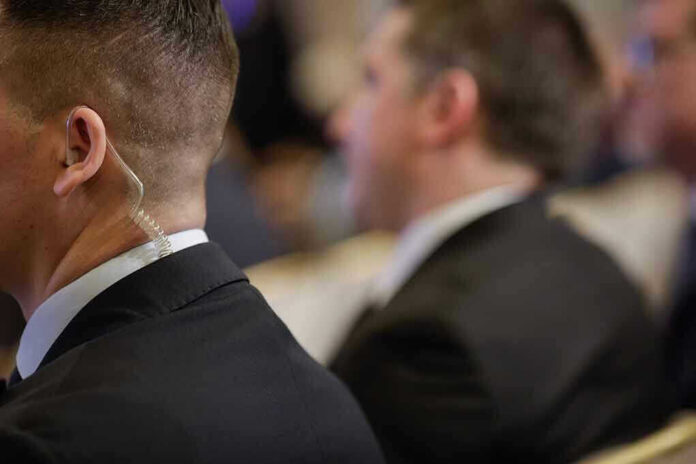
A routine security checkpoint at Trump National Doral turned chaotic when a disruptive man allegedly made physical contact with a Secret Service agent and ended up in cuffs.
Quick Take
- Newly circulated footage shows an unidentified man being arrested at Trump National Doral Golf Club in Miami on May 2, 2026.
- Reports say the man became disruptive at a security screening area, allegedly touched a Secret Service agent, and resisted arrest.
- Authorities have not released the man’s identity or a detailed motive, and no weapon has been reported in this incident.
- The episode underscores why high-profile venues tighten perimeters—and why even “minor” disruptions now carry major political and security consequences.
What the video shows at Trump Doral’s security checkpoint
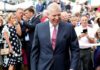
Video of the May 2 incident at Trump National Doral Golf Club shows officers moving quickly after a confrontation at a security checkpoint. The man, not publicly identified in early reports, is described as disruptive and accused of making physical contact with a Secret Service agent. Police then take over the encounter, restraining him and completing the arrest while bystanders watch. No official motive has been reported, and the episode appears confined to the screening area.
In practical terms, the location matters as much as the behavior. Trump Doral is a public-access resort but becomes a tightly controlled environment when a protected figure is connected to an event or property. That means security personnel are positioned to treat any disruption—especially physical contact—as a potential threat that must be contained immediately. The available reporting does not describe injuries or weapons, and it does not indicate whether Donald Trump was present.
Why a brief disturbance triggers a swift federal response
Secret Service operations are built around prevention, not reaction. At places tied to a sitting president or a protectee—especially high-traffic venues like golf resorts—agents and local police emphasize perimeter control, screening, and quick separation of any individual who refuses instructions. When physical contact is alleged, even if it is not described as a serious assault, it changes the posture from “unruly guest” to “possible security breach,” which typically leads to immediate detention and charges such as resisting.
Reports also highlight a familiar frustration across the political spectrum: Americans want safety and order without the country feeling permanently on edge. Conservatives tend to see incidents like this as proof that law enforcement must be supported and empowered to act decisively at sensitive sites. Many liberals, meanwhile, worry that heightened security can spill into overreach. In this case, the known facts remain narrow—disruptive conduct, alleged physical contact, and an arrest—so broader conclusions should be limited until authorities release more detail.
What’s known—and what’s still missing—about charges and identity
The current public record is thin beyond the basic allegation set. Multiple reports describe accusations including resisting arrest, disorderly conduct, and physical contact with a Secret Service agent. They do not name the suspect, specify whether a formal complaint has been filed in court, or provide a timeline beyond the on-scene arrest. They also do not clarify what the man said, whether he intended to enter the property, or whether he was removed from a line of guests.
How this compares to prior golf-course security scares
Coverage has drawn an implicit contrast with earlier golf-course security cases where weapons were alleged. In those situations, concerns focus on open perimeters, long sight lines, and the difficulty of securing sprawling outdoor space. The Doral arrest, as described, appears different: a checkpoint disturbance with no weapon mentioned and no claim of a plotted attack. Still, the political environment magnifies every breach at a Trump-linked location, and that amplifies pressure on the Secret Service to show control.
New footage shows the moment a man was arrested at Trump Doral National Golf Club after making "physical contact" with a Secret Service agent, just one week after the shooting at the WHCA Dinner.
Authorities said President Trump was not on the property at the time of the arrest,… pic.twitter.com/ZHPseNorGf
— Fox News (@FoxNews) May 3, 2026
For voters already convinced that institutions are failing, these snapshots land in a complicated way. One side sees a necessary display of order: agents and police enforcing boundaries at a sensitive site. The other sees a country where tempers, distrust, and political celebrity create constant flashpoints. With the suspect still unidentified publicly and no detailed statement from authorities included in the available reporting, the responsible takeaway is narrow but important: security at politically connected venues is unforgiving, and physical contact with agents almost guarantees a forceful response.
Sources:
https://www.foxnews.com/video/6394486087112
https://www.foxnews.com/video/6394478763112